
Overheating of switchgear contacts—do we really have to wait until a fire breaks out to notice?
Release time:
2025-07-05
Overheating of the distribution cabinet contacts—do we really have to wait until a fire breaks out to notice?
I. Current Status and Challenges of Temperature Monitoring in Distribution Cabinets
As a critical hub in the power system, distribution cabinets are prone to overheating at contact points and cable joints due to poor contact or excessive load. Once the temperature gets out of control,
Not only does it accelerate equipment aging, but it may also trigger serious incidents such as short circuits and fires, jeopardizing the stability of the power supply and the safety of personnel and property.
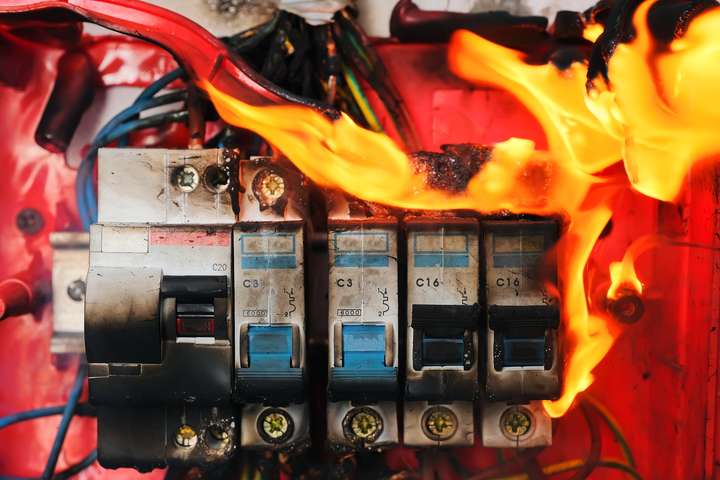
Traditional temperature-monitoring methods largely rely on manual inspections, with power‑line personnel using handheld thermometers to conduct periodic checks. However, the internal structure of distribution cabinets is complex and features a wide variety of interfaces, making manual inspection not only inefficient,
Moreover, it is difficult to achieve comprehensive coverage of all critical components. Meanwhile, non‑specialized personnel are not authorized to open distribution cabinets for inspection, resulting in high inspection costs. In addition, conventional inspection methods cannot monitor temperature changes in real time, often detecting faults only after they have occurred and thus missing the optimal window for intervention.
II. Technical Principles and Functional Characteristics of Infrared Thermal Imaging Thermometers
Infrared imaging thermometers integrate infrared array temperature measurement and network transmission technologies, featuring a built-in high-sensitivity infrared detector and a high-resolution visible-light detector. Their core principle is based on the fact that all objects emit infrared radiation…
It radiates infrared energy outward, with the radiant energy being temperature‑dependent. The device uses an infrared detector to capture the infrared radiation emitted from various components inside the distribution cabinet and converts it into electrical signals.
The data are further processed to generate intuitive temperature readings and infrared thermal images, while a visible-light detector assists in precisely locating the target for temperature measurement.
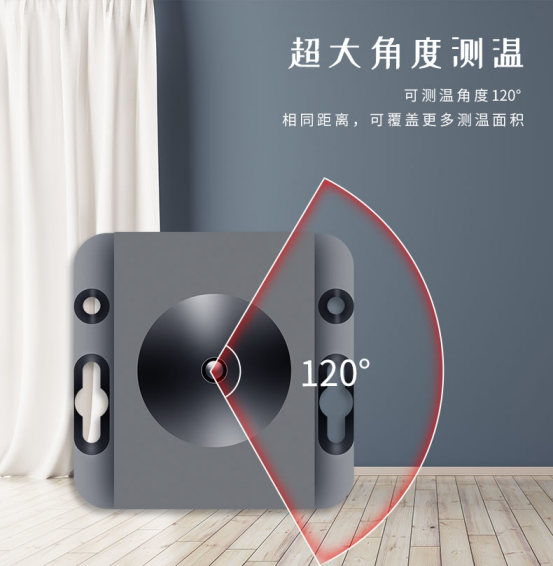
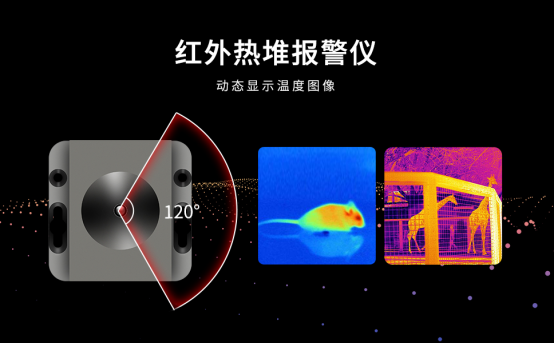
This device boasts a range of powerful features: its infrared array-based rapid temperature measurement can simultaneously acquire temperature data from multiple points within the distribution cabinet, enabling comprehensive monitoring; it also supports network transmission.
Real-time temperature data and images are transmitted remotely to the monitoring center, enabling management personnel to view them from a distance. The over‑limit alarm function allows users to set custom temperature thresholds; once the monitored temperature exceeds the threshold,
It immediately triggers an audible and visual alarm and pushes out early warning notifications; the infrared imaging function displays temperature distribution as a visualized image, making temperature anomalies instantly apparent and facilitating rapid fault localization.
III. Scope of Industry Application
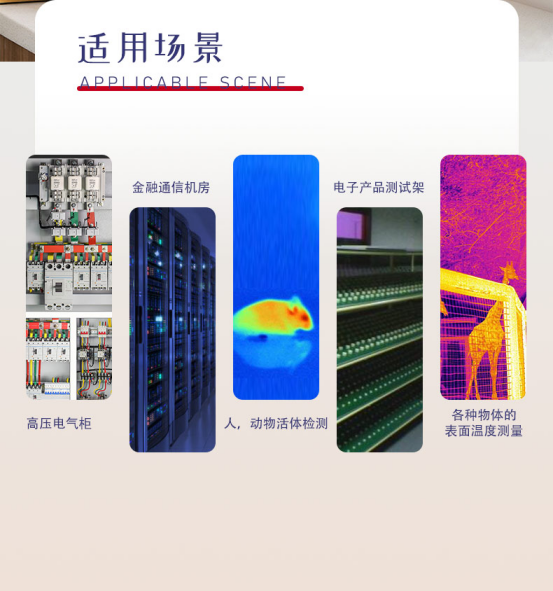
(1) Power Industry
In substations, distribution rooms, and similar facilities, infrared thermal imagers can be mounted on various switchgear cabinets to perform real-time monitoring of both high‑voltage and low‑voltage equipment. By continuously acquiring temperature data from contacts, busbars,
Temperature data and thermal images from critical components such as cable joints enable the timely identification of potential overheating risks, ensuring the safe and stable operation of the power system and reducing outage incidents caused by equipment failures.
(II) Industrial Production Sector
Distribution cabinets in factories provide power to production equipment. In industries such as chemical processing, metallurgy, and mechanical manufacturing, the production environments are complex, with heavy electrical loads and a high risk of equipment failure.
Infrared thermal imagers enable 24/7 continuous monitoring of distribution cabinets. By correlating this data with the operational status of production equipment, they can proactively identify potential fault risks, preventing power‑related disruptions to normal production and minimizing economic losses.
(3) Architecture and Commerce Sector
In large buildings such as office towers, shopping malls, and hotels, distribution cabinets are numerous and widely dispersed. Infrared thermal imagers can be deployed with great flexibility to monitor distribution cabinets across various areas.
Especially in high‑occupancy areas, it can effectively prevent fire incidents caused by overheating of electrical distribution cabinets, safeguarding the safety of occupants and property while maintaining orderly commercial operations.
IV. Advantages of Infrared Thermal Imaging Thermometers in Application
(1) Efficient and Precise Monitoring
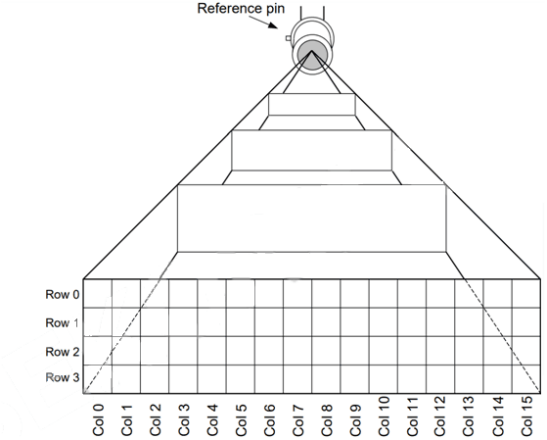
Infrared array temperature‑measurement technology enables rapid, synchronous temperature monitoring at multiple points inside distribution cabinets, significantly enhancing both the efficiency and comprehensiveness of monitoring compared with conventional single‑point detection.
High-sensitivity detectors can precisely capture even the slightest temperature variations, leaving no hidden overheating risks undetected and providing a reliable basis for fault diagnosis.
Schematic diagram of infrared thermopile temperature measurement:
(II) Intelligent Real-Time Early Warning
Thanks to its network transmission and over‑limit alarm functions, the infrared thermal imager enables remote, real-time monitoring. Regardless of the location of management personnel, they can receive temperature‑anomaly alerts instantly.
Take timely measures to address potential hazards and prevent accidents from escalating. Visual infrared imaging further simplifies and streamlines fault localization.
(3) Big Data Analytics and Scientific Decision-Making
The vast amounts of temperature data collected by the equipment can be used for in-depth analysis. By processing big data on peak electricity consumption and temperature fluctuations, it is possible to identify patterns in temperature changes and predict time periods or locations where high-temperature risks are likely to occur.
Based on these analytical findings, scientifically sound and well‑justified management strategies can be developed to optimize inspection schedules, thereby shifting from reactive responses to proactive prevention.
V. Application Prospects
As the power system advances toward greater intelligence, infrared thermal imagers will assume an even more pivotal role in monitoring temperatures within distribution cabinets. In the future, through deep integration with technologies such as the Internet of Things and artificial intelligence,
It holds the promise of enabling smarter fault diagnosis and predictive maintenance, further enhancing the reliability and safety of power systems and fortifying the electric‑power safety net for both societal and industrial operations.
MORE NEWS
Contact Us
Tel:+86-189-23711266 400-1273-421
E-mail:liulin@rf-md.com
Shenzhen office: 506-509, zone 1, block B, Huayuan science and Technology Innovation Park, No. 168, Baoyuan Road, Xixiang, Bao'an District, Shenzhen
Changsha Branch: 21d, building F4, Lugu enterprise Plaza, No. 27, Wenxuan Road, Yuelu District, Changsha

Follow us
-

E-mail:
yangyalan@rf-md.com
-

Tel:
+86-755-23284193
-
