
What communication methods are available for gateway devices?
Release time:
2024-12-10
Gateway Devices employ a variety of communication methods, broadly categorized into wired and wireless communications. The following provides a detailed overview of these two types of communication:
I. Wired Communication Methods
Ethernet: Ethernet is a widely used wired communication technology that offers advantages such as high speed, high reliability, and stability. Gateway devices can connect to routers or switches via Ethernet interfaces, thereby enabling connectivity to the Internet and data transmission.
Serial Communication: Serial communication is a low-speed, short-distance communication method commonly used for transmitting data over short ranges between devices. Gateway devices can connect to other devices—such as sensors and actuators—via serial interfaces.
Other fieldbus protocols, such as PROFIBUS, DeviceNet, and CANopen, are primarily used in industrial automation. Gateway devices can leverage these protocols to connect with industrial equipment and exchange data.

II. Wireless Communication Methods
Wi‑Fi: Wi‑Fi is a widely used wireless communication technology that offers high speed, great flexibility, and ease of deployment. Gateway devices can connect to home or enterprise wireless networks via Wi‑Fi, enabling internet access and data transmission. With its stable connection and fast throughput, Wi‑Fi is well suited for most smart‑home applications.
Bluetooth: Bluetooth is a low‑power, short‑range wireless communication technology commonly used for connecting and transferring data between smart devices. Some gateway devices support Bluetooth connectivity; in particular, Bluetooth Mesh enables multi‑hop communication among devices, enhancing network stability and coverage. Bluetooth connections are typically employed for short‑range, low‑power device-to-device communication.
Zigbee: Zigbee is a low‑speed, low‑power wireless networking protocol well suited for the numerous sensors and control devices found in smart homes. Gateway devices can serve as coordinators within a Zigbee network, managing communication and data transmission among devices. Zigbee networks feature self‑organization, self‑healing capabilities, and scalability, making them ideal for building large‑scale IoT systems.
Other wireless communication technologies—such as IPv6, BLE (Bluetooth Low Energy), and LoRa—are also widely used in the IoT field, each with its own strengths, weaknesses, and specific application scenarios.
LoRa (Long Range Radio) is a low-power, short-range wireless standard primarily designed for long-distance wireless communication. It employs spread-spectrum modulation, enabling stable connectivity even in highly interference-prone environments while reducing power consumption and extending battery life. LoRa technology is well-suited for applications that require local data collection, involve numerous nodes, and handle small volumes of low‑rate data, such as agricultural monitoring and smart home systems.
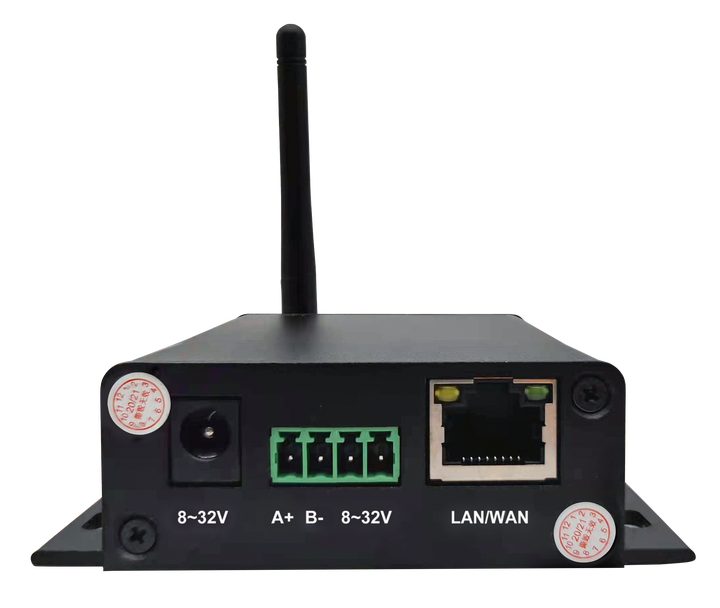
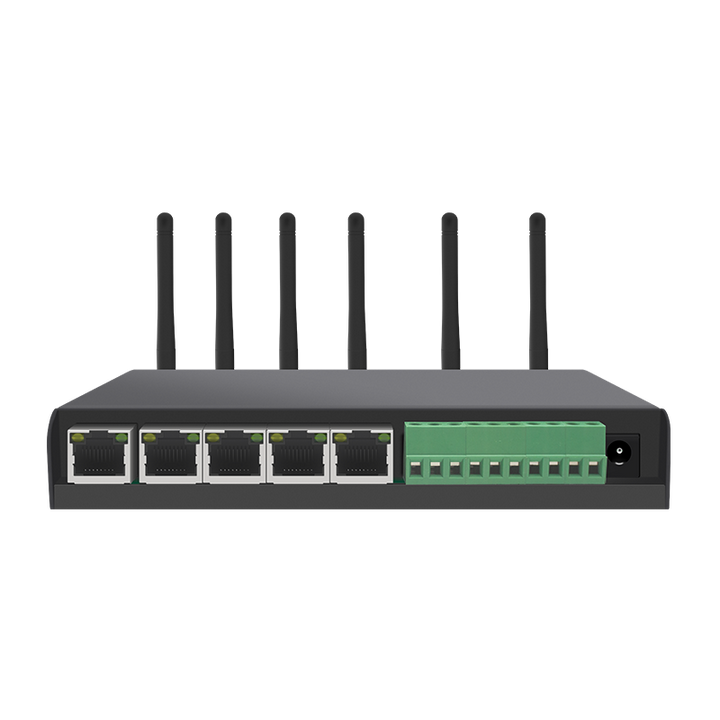
LoRaWAN (LoRa Wide Area Network) is an IoT communication protocol built on LoRa technology, establishing a comprehensive system architecture and set of communication protocols. LoRaWAN employs a star or star‑to‑star topology, comprising four key components: LoRaWAN end devices, LoRaWAN gateways, a LoRaWAN network server, and a user application server. This network architecture enables seamless interconnection among IoT devices, facilitating remote data transmission and processing.
The characteristics of LoRaWAN include:
High security: It provides security features such as node authentication and data encryption, ensuring the security of data transmission.
Supports large-scale device connectivity: It can manage thousands or even tens of thousands of devices concurrently, making it suitable for large-scale IoT applications.
Excellent flexibility: It supports multiple data transmission modes—such as unicast, multicast, and broadcast—and offers a variety of frequency band options to meet the requirements of diverse application scenarios.
In a LoRaWAN network, LoRaWAN end devices handle data collection, device control, and wireless transmission; LoRaWAN gateways relay messages between end devices and the LoRaWAN server, serving as transparent bridges; the LoRaWAN server manages and controls all LoRaWAN devices connected to the network and communicates with user application servers; meanwhile, the user application server processes, analyzes, displays, and stores the data uploaded by the LoRaWAN server.
III. Communication Process
Gateway devices typically involve the following key steps during communication:
Device Discovery and Pairing: After startup, the gateway actively scans for and discovers nearby smart devices. Users can use a mobile app or other interfaces to select the desired device and initiate the pairing process. During pairing, the gateway establishes a secure communication channel with the device, ensuring the security of data transmission.
Network Configuration: After the device is successfully paired, the gateway assigns network parameters such as an IP address based on the specific conditions of the home or enterprise network, ensuring seamless connectivity to the Internet and the IoT system.

Data Exchange and Control: Once a device is successfully connected, the gateway serves as the central node for data exchange, receiving control commands from cloud servers, mobile apps, or other smart devices and forwarding them to the corresponding smart devices for execution. At the same time, the gateway collects the devices’ operational status and data, uploading this information to the cloud server for users to view and analyze.
In summary, Gateway Devices support a variety of communication methods, allowing you to select the most suitable option based on the specific application scenario and requirements.

MORE NEWS
Contact Us
Tel:+86-189-23711266 400-1273-421
E-mail:liulin@rf-md.com
Shenzhen office: 506-509, zone 1, block B, Huayuan science and Technology Innovation Park, No. 168, Baoyuan Road, Xixiang, Bao'an District, Shenzhen
Changsha Branch: 21d, building F4, Lugu enterprise Plaza, No. 27, Wenxuan Road, Yuelu District, Changsha

Follow us
-

E-mail:
yangyalan@rf-md.com
-

Tel:
+86-755-23284193
-
