
Are PT100 and PT1000 interchangeable?
Release time:
2024-10-31
Are PT100 and PT1000 interchangeable?
Can PT100 and PT1000 sensors be used interchangeably? This is a question frequently asked in the fields of industrial automation and temperature measurement. Although both are platinum resistance temperature detectors with similar operating principles, they are not readily interchangeable—this depends largely on the specific requirements of the application and the differences in their respective characteristics.
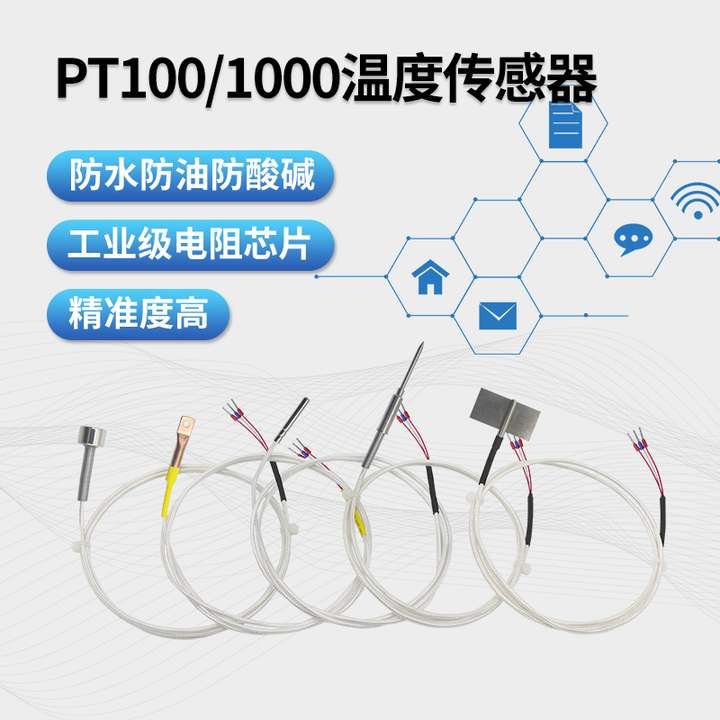
The primary difference between PT100 and PT1000 thermistors lies in their resistance‑temperature ranges. At 0°C, the PT100 has a resistance of 100 ohms, whereas the PT1000 exhibits a resistance of 1,000 ohms. This distinction results in variations in measurement accuracy, sensitivity, and signal transmission. In applications requiring high precision or long‑distance measurements, the PT1000—owing to its higher resistance value and lower temperature coefficient—may deliver more stable and accurate results.
PT100 and PT1000 can be used interchangeably under certain conditions, but the following factors must be taken into account:
I. Basic Characteristics
PT100: Its resistance is 100 ohms at 0°C and approximately 138.5 ohms at 100°C.
PT1000: At 0°C, its resistance is 1000 ohms, and its temperature‑resistance relationship is similar to that of PT100.
II. Interchangeability and Calibration
Interchangeability: In practical applications, PT100 and PT1000 sensors can be used interchangeably, but the measurement results must be appropriately corrected.
Calibration method: Since their resistance values exhibit a linear relationship with temperature, calibration can be performed through simple mathematical calculations. For example, to convert a PT100 temperature measurement into the equivalent temperature value for a PT1000, use the formula: “Equivalent Temperature (PT1000) = Actual Temperature (PT100) × 1000 / 100.” Conversely, to convert a PT1000 temperature reading into the equivalent PT100 temperature, apply the formula: “Actual Temperature (PT100) = Equivalent Temperature (PT1000) × 100 / 1000.”
III. Performance Differences
Accuracy and Stability: The PT1000 typically offers higher accuracy, with an error range of ±0.1°C, though its stability may be slightly lower than that of the PT100. The PT100 generally achieves an accuracy of ±0.3°C and exhibits excellent stability.
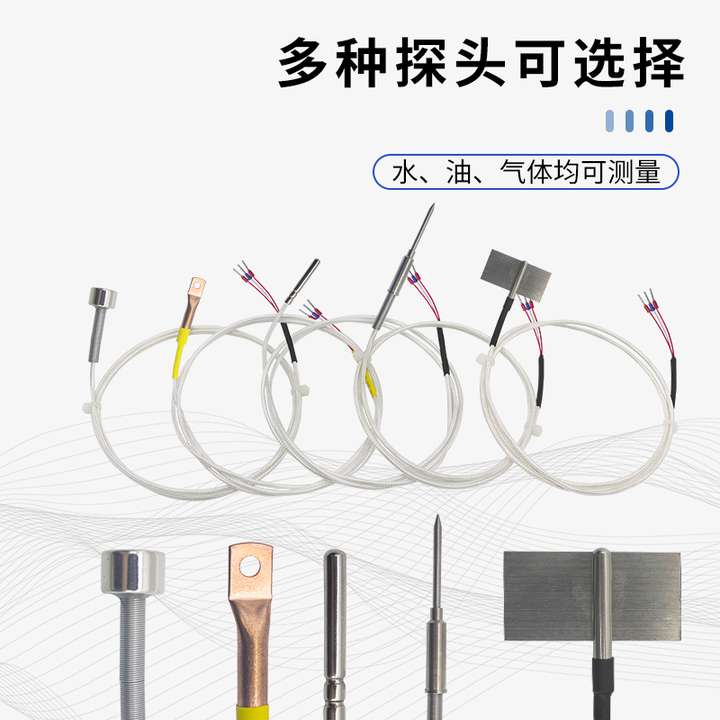
Response Sensitivity: The PT1000 exhibits higher response sensitivity, with its resistance changing by approximately 3.8 ohms for a one-degree temperature variation, whereas the PT100 shows a resistance change of about 0.38 ohms per degree.
Temperature range: PT1000 is better suited for measuring temperature variations within a narrower range, whereas PT100 is more appropriate for measuring temperature changes over a wider range.
Price and Service Life: PT100 sensors are relatively inexpensive and have a long service life, typically exceeding five years. PT1000 sensors are more costly but offer higher accuracy, making them suitable for high‑precision temperature measurement applications; their service life generally exceeds three years.
IV. Limitations on Universality
Measurement System Compatibility: When replacing a PT100 or PT1000 sensor, ensure that the measurement system—such as data loggers or controllers—is compatible with the new sensor type. Some systems may require configuration adjustments or recalibration.
Accuracy requirements: If the measurement system has stringent accuracy specifications, it is essential to carefully evaluate the accuracy differences between PT100 and PT1000 sensors and select the most suitable sensor type.
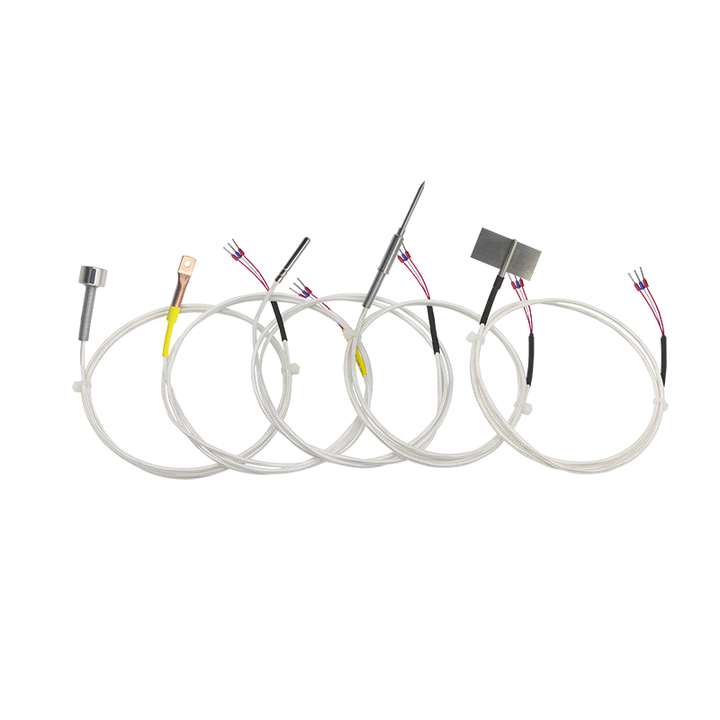
However, if the existing measurement system or equipment was designed for PT100 sensors, directly replacing them with PT1000 sensors may result in compatibility issues. These challenges encompass circuit matching, signal processing, and display calibration, among others. Therefore, in most cases, to ensure system stability and accuracy, it is not advisable to interchange these two types of sensors without careful consideration.
Of course, with advances in technology, some modern temperature‑measurement systems now feature adaptive capabilities, enabling them to recognize and accommodate various types of platinum resistance temperature detectors. Under such circumstances, the interchangeability between PT100 and PT1000 sensors may be improved to a certain extent. Nevertheless, to ensure optimal performance and reliability, it remains essential to carefully evaluate the specific characteristics and application requirements of each sensor when selecting and deploying them.
MORE NEWS
Contact Us
Tel:+86-189-23711266 400-1273-421
E-mail:liulin@rf-md.com
Shenzhen office: 506-509, zone 1, block B, Huayuan science and Technology Innovation Park, No. 168, Baoyuan Road, Xixiang, Bao'an District, Shenzhen
Changsha Branch: 21d, building F4, Lugu enterprise Plaza, No. 27, Wenxuan Road, Yuelu District, Changsha

Follow us
-

E-mail:
yangyalan@rf-md.com
-

Tel:
+86-755-23284193
-
