
Application of Millimeter-Wave Radar Fall Sensors in the Third Restroom
Release time:
2024-06-26
Application of Millimeter-Wave Radar in the Third Restroom
Population Flow Monitoring and Safety Management
In the third‑party restroom, millimeter‑wave radar can be used to monitor pedestrian traffic in real time and assess the level of congestion. When the number of occupants exceeds a threshold, the system automatically triggers an alert, prompting facility staff to manage the flow and ensure user safety. Additionally, millimeter‑wave radar can detect abnormal conditions within the restroom—such as prolonged periods of inactivity or sudden surges in occupancy—enabling timely response measures.
Convenient service experience
Millimeter-wave radar can be integrated with smart lighting systems to enable automated motion-sensing illumination. When someone enters the restroom, the system automatically turns on the lights, providing a comfortable lighting environment. Moreover, based on the radar’s detection of pedestrian traffic, the system can dynamically adjust both the brightness and color temperature of the lighting, delivering a more personalized user experience. In addition, millimeter-wave radar can be paired with intelligent access-control systems to automate door opening and closing, enhancing convenience for users.
Privacy Protection and Data Security
In third‑party restrooms, privacy protection and data security are of paramount importance. During data acquisition and processing, millimeter‑wave radar ensures that users’ personal information remains confidential. At the same time, the system can employ encryption to safeguard data, preventing unauthorized access and misuse. Furthermore, millimeter‑wave radar can be integrated with intelligent monitoring systems to enable remote surveillance and management, thereby enhancing both the safety and operational efficiency of the restroom.
- Disability Toilet Assistance System
System Overview
1) Remaining Guard
Installed in accessible restrooms, this device allows individuals from vulnerable groups to activate a manual alarm button when assistance is needed, triggering nearby audio‑visual alarms and enabling prompt response from relevant security personnel.
2) Public Health
Public restroom fall detection employs non-imaging technology for remote monitoring, enabling automatic alarm and assistance upon a fall to help hospitals provide timely care to patients.
Each inpatient room in the various departments is equipped with a private bathroom, and upon activation of the detector, the alarm signal is routed via a signal processor to the central management host for processing.
Detection can be performed whether the system is in motion or at rest, and the timing can be pre‑set via the detector’s signal processor.
It features time‑of‑use and advance‑notification functions, real‑time output, zone‑exit output, remote input, power supply, and notification via audible alerts and visual indicators.
It allows you to set a time suitable for toilet use; it can issue advance notifications by utilizing delayed alarm output; and it features both real-time output and zone‑based output capabilities.
Our company, with respect to Third restroom staff A problem that fell apart, and we developed a set of… Accessible restroom Fall‑alert system. This system consists of three components: sensors, wireless transmission, and an alarm terminal. The sensors include an emergency button, Composed of a 60 GHz millimeter-wave radar sensor, the 60 GHz millimeter-wave radar is mounted at the top of the restroom and features a built-in… Personnel Fall detection algorithm, when there is Personnel Fell down , output an alarm signal; the emergency button is installed beside the toilet stall, Personnel In case of an emergency, pressing the button will trigger an alarm signal. Wireless transmission is available. LoRa, LoRaWAN, and CAT1 are three wireless transmission methods. With LoRa/LoRaWAN, the received alarm signal is forwarded directly to the alarm terminal without requiring a cloud platform; however, it still relies on LoRa or LoRaWAN for relay. CAT1, on the other hand, uses the cloud platform to forward data—no gateway is needed—but incurs annual data‑usage fees charged by the operator. The alarm terminal is placed at the nurse’s station; upon seeing an alert on the terminal, the nurse promptly attends to the situation. The corresponding flowchart is shown below:

System Functions
(1) Remaining Guard
The system is designed so that when an emergency arises in a disabled restroom and assistance is needed, pressing the red emergency call button triggers an audible and visual alarm on the restroom door. Simultaneously, the central management station’s emergency call host emits an audible and visual alarm and displays the identifier of the affected restroom. Upon receiving the alert, security personnel promptly respond, arrive on site, and use a dedicated key to reset the emergency button, thereby deactivating the alarm. All call and reset events are logged, and the system employs a two‑wire bus architecture for connectivity.
The system employs a two‑wire bus in parallel, requiring no additional external devices on the extension units. Installation and wiring are simple, convenient, and cost‑effective. It supports one‑touch emergency call and alarm activation, two‑way calling, two‑way intercom, and features a cancel button on each extension to prevent accidental operations.
(2) Public Health
When a person faints and falls in the restroom or experiences another fall-related incident, the system automatically detects the event and triggers an alarm. All alarm and alarm‑clearance records are logged, and the system must support fall detection, wake‑up alarm clearance, entry alerts, and exit alerts.
Management Server Hosting: You can delegate the management of this management server’s alarm points to another management server.
Device Overview: Displays information for each alarm point and supports the display of a device overview.
Multi-channel alarm: The central management unit can display multiple alarm channels and retain their status; regardless of whether the management unit is in standby or busy mode, alarm signals are still routed through normally, with no “busy” condition.
Unresolved Incident Alerts: Unresolved incidents are generated according to the rules and displayed on the central management console, ensuring they can be accessed anytime, anywhere to prevent oversight.
Call Upload: When a alarm point’s call times out without a response or the device is powered off, the system can upload the call information to a higher-level management server.
Place a millimeter-wave radar sensor in each restroom for detection. Personnel Whether a fall has occurred: when the millimeter-wave radar sensor detects that someone has fallen, it proceeds by… LoRa/LoRaWAN wireless devices report alarm information to the LoRa/LoRaWAN gateway, which then uploads the alarm data to the cloud platform and simultaneously transmits it over the network to… Management personnel or security personnel the alarm terminal, allowing Management personnel or security personnel Handle it promptly.

III. Case Analysis
Currently, some public venues have begun experimenting with millimeter-wave radar in third‑gender restrooms. For example, a major shopping mall has installed a millimeter-wave radar system in its third‑gender restroom, enabling functions such as crowd monitoring, automatic lighting, and intelligent access control. Practical implementation has shown that this system not only enhances the safety and convenience of the restroom but also reduces management and maintenance costs.
Product Description
LoRa communication gateway
The LoRa communication gateway is a critical device for transmitting data acquired by cigarette‑detection sensors to a remote server. LoRa technology offers long‑range transmission, low power consumption, and high reliability, making it well suited for large‑scale data‑transfer applications.
Product image:

Product Specifications:
| Specifications |
Parameter |
Note |
| Main control CPU |
240 MHz clock speed |
|
| Data interface |
1 Ethernet port, 1 RS485 port |
|
| Network protocol |
IP, TCP, UDP, HTTP, HTTPS |
|
| Internet of Things Protocol |
Support MQTT |
|
| Wireless |
Supports two channels LORA wireless communication, with a wireless frequency band of 470 MHz. |
Default is one channel. The LORA wireless frequency band can be customized. |
| Wireless protocol |
Support LoRa wireless protocol |
|
| Power supply method |
DC power supply, voltage range 6V to 12V. |
|
Remote Display Screen
Remote display screens are one of the key ways to present hot spring water temperature data to both management personnel and users. By installing these screens at the spa site or in the management center, staff can monitor real-time temperature readings at any time and take appropriate measures promptly. Meanwhile, for visitors, remote displays provide up-to-date information on water temperatures, helping them make informed choices about which pools to use and how to enjoy their spa experience.
Product image:

Product Specifications:
| Specifications |
Parameter |
Note |
|
| Main control |
CPU |
ARM Cortex-A series processors, with clock speeds up to 1.2 GHz. |
|
| Memory |
32KB I-Cache/32KB D-Cache/256KB L2-Cache |
|
|
| Model number |
HYD7LA1 |
|
|
| Power supply |
DC12V/1A |
|
|
| Operating temperature |
-10℃~75℃ |
|
|
| Operating humidity |
0% to 95% RH, non-condensing |
|
|
| Resolution |
1024x600 |
|
|
| Network protocol |
IP, TCP, UDP, HTTP, and other protocols |
|
|
| RS48 Protocol |
MODBUS protocol, custom RS485 protocol |
|
|
| LoRa protocol |
LoRa protocol, self-organizing LoRa protocol |
|
|
Sensor
2.3.1 Millimeter-wave radar fall sensor
- Product Features
Millimeter-wave radar fall sensors are installed at the ceiling of each restroom to detect whether a patient has fallen. Equipped with an advanced fall-detection algorithm, they continuously monitor patients in the stall and immediately… The alarm signal is transmitted via wired and wireless means.
- Product image

- Product Specifications
| Specifications |
Parameter |
Note |
| Radar frequency band |
60GHZ |
|
| Radar algorithm |
Fall detection algorithm |
|
| Response time |
<1 second |
|
| Detection range |
200~350 cm |
|
| Detection range |
25~145CM |
|
| Power supply |
12V, 1A |
|
| Communication method |
RS485/CAT1 |
Not supported by default. CAT1 |
2.3.2 Emergency button
- Product image

- Product Specifications
| Specifications |
Parameter |
Note |
| Power supply |
DC 3V button cell battery |
|
| Operating temperature |
-10℃~+60℃ |
|
| Operating temperature |
<1 second |
|
| Housing material |
Colloid |
|
| Standby time |
One year |
|
| Reporting Method |
Key press reporting |
|
| Communication method |
LoRa/LoRaWAN/CAT1 |
Not supported by default. CAT1 |
2.4L o Ra/LoRaWAN Gateway
- Product image
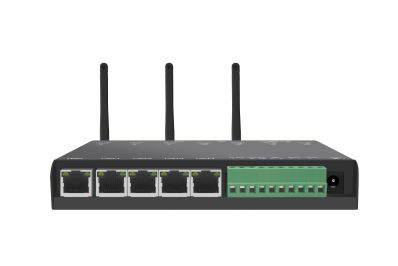
- Product Specifications
| Project |
Parameter |
Note |
|
| Product Functions |
L NOW Functionality |
Supports standard It RaWAN Agreement |
|
| L oRa Untrusted communication has eight uplink channels and one downlink channel. |
|
||
| Mobile wireless functionality |
Support W IFI Hotspot Feature |
|
|
| L TE Supports three mode options: domestic, European, and U.S.; domestically, it supports all network bands. |
|
||
| Supports Ethernet and 3G/4G/5G Upstream and downstream data backhaul, with automatic switching support. |
|
||
| System Functions |
Supports overseas T TN Server |
|
|
| Supports Chinese /English interface switching and local time setting |
|
||
| Supports remote administrator login for maintenance and troubleshooting. |
|
||
| Support M QTT , support W EB Interface Management |
|
||
| Supports key presses or W EB Restore factory settings |
|
||
| Wireless Performance |
L NOW Wireless channel line |
8 channels |
|
| Work mode |
Full-duplex /Half-duplex |
|
|
| It Ra Communication rate |
292 b ps~5.4K b P.S. |
|
|
| Maximum transmit power |
27 database m |
|
|
| Maximum receiving sensitivity |
-141 d bm(SF=12) |
|
|
| Operating frequency band |
China 470MHZ Australia 923MHZ United States 915MHZ Europe 868MHZ |
Defaults to 4 70 MHz, Customization is required for different frequency bands.
|
|
| Data Upload |
10/100M Ethernet and 3G/4G/5G |
Not supported by default. 5 G |
|
| L TE Standardization |
Domestic 4 G Supported frequency bands |
LTE-TDD: B38/B39/B40/B41 LTE-FDD: B1/B3/B5/B7/B8 TD-SCDMA: B34/B39 UMTS: B1/8 EVDO: 800 MHz CDMA1x: 800 MHz GSM: 850/900/1800/1900 |
|
| Europe 4 G Supported frequency bands |
F DD LTE :B1/B3/B5/B8/B20 T DD LTE: B38/B40/B41 W CDMA:B1/B5/B8 G SM : B3/B8 |
|
|
| United States 4 G Supported frequency bands |
F DD LTE: B2/B4/B12 W CDMA LTE: B2/B4/B5 |
|
|
| W IFI |
Support 802.11a/b/g/n Agreement, 2.4G Frequency band |
|
|
| Ethernet |
Support 10M/100M Adaptive Network Communication |
|
|
| Product Specifications |
Operating temperature |
-30 °C ~65 °C |
|
| Operating temperature |
5 %RH~90%RH |
|
|
| Certification |
C E/FCC |
|
|
| Power supply |
D C Power supply, voltage is 6 V~12V |
|
|
IV. Conclusion and Future Prospects
Millimeter-wave radar–based fall‑detection sensors hold great promise and significant potential for application in third‑party restrooms. By enabling real-time monitoring of pedestrian traffic, delivering convenient service experiences, and safeguarding data privacy, these sensors can substantially enhance user satisfaction and sense of security. Looking ahead, as the technology continues to evolve and mature, its deployment in third‑party restrooms is likely to become even more widespread and sophisticated. At the same time, it will be essential to prioritize the protection of users’ privacy and data security, ensuring the technology’s sustainable and responsible development.
MORE NEWS
Contact Us
Tel:+86-189-23711266 400-1273-421
E-mail:liulin@rf-md.com
Shenzhen office: 506-509, zone 1, block B, Huayuan science and Technology Innovation Park, No. 168, Baoyuan Road, Xixiang, Bao'an District, Shenzhen
Changsha Branch: 21d, building F4, Lugu enterprise Plaza, No. 27, Wenxuan Road, Yuelu District, Changsha

Follow us
-

E-mail:
yangyalan@rf-md.com
-

Tel:
+86-755-23284193
-
