
The Millennium‑Old Freshness Secret of Chang’an Lychees: How Temperature and Humidity Monitoring Protects This Precious Fruit, Which Changes Color Within a Single Day
Release time:
2025-08-14
No doubt many people first became familiar with lychees thanks to Yang Guifei. ” A lone rider in the red dust, the concubine smiles—no one knows it is lychees arriving. ” Lychee, Especially prized are the Chang’an lychees, which have been celebrated since ancient times.
The preservation challenge of “color changes in one day, aroma in two, and flavor in three.” Used in the Tang Dynasty The methods of “preserving ice in water” and “sealing in bamboo tubes” seek to lock in the litchi’s fresh sweetness.
Yet, as the post‑horse jolts along, the melting ice seeps in, bringing dampness; and sealed within the bamboo tube, the temperature rises imperceptibly. The lychees that reach the noble consort’s lips may still retain their lustrous hue, but their flesh has turned faintly sour, and their juice has grown dark and astringent.
Store ice out of water
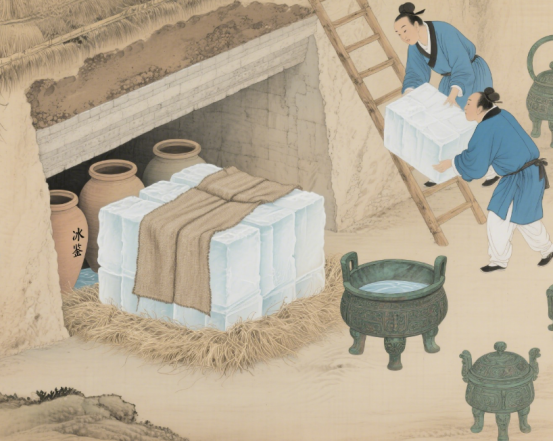
Bamboo Tube Sealing

Today, a millennium later, technology has endowed this fine fruit of Lingnan with even greater longevity, and one of its key secrets lies in the precise control of temperature and humidity within its storage environment. Precise control 。
Modern wireless sensing technology is quietly becoming the link that brings lychees from the branch to the palate. “The Freshness Guardian.”

I. The Key to Litchi Preservation: Why Are Temperature and Humidity So Crucial?
The delicate nature of lychees stems from their physiological characteristics:
1. Moisture is extremely prone to loss: The peel has a unique structure, causing water to evaporate extremely rapidly; the loss of moisture from the surface directly leads to browning and desiccation. Maintain 90%-95% of
High-humidity environment (RH) It is the foundation for locking in moisture and maintaining a plump, vibrant appearance.
2. Vigorous respiratory metabolism: Still after picking “Living tissue” experiences accelerated respiration at high temperatures, consuming sugars and nutrients and leading to flavor deterioration and faster decay.
Low-temperature environments (typically at 1-5℃ ) Can effectively inhibit respiration rate.
3. Pathogenic bacteria easily proliferate: High temperature and high humidity create favorable conditions for the proliferation of pathogenic microorganisms. Precise low-temperature conditions can inhibit microbial activity, while being combined with appropriate humidity levels.
(Avoiding excessive humidity that leads to condensation and subsequent rot) is key to minimizing losses from disease.
Even a deviation of just a few millimeters in temperature and humidity can cause the quality of lychees to plummet within a short period. Traditional thermometers and hygrometers suffer from delayed readings and limited coverage,
The reliance on manual inspections makes it difficult to meet the requirements of a full‑chain cold chain for lychees. Environmental stability The stringent requirements.
II. Wireless Sensing: Equipping Lychee Preservation with “The Eye of Wisdom” and “The Nerve of Agility”
The core value of modern wireless temperature and humidity monitoring technology lies in its… Real-time performance, precision, and non-intrusiveness , perfectly addressing the pain points of lychee cold-chain management:
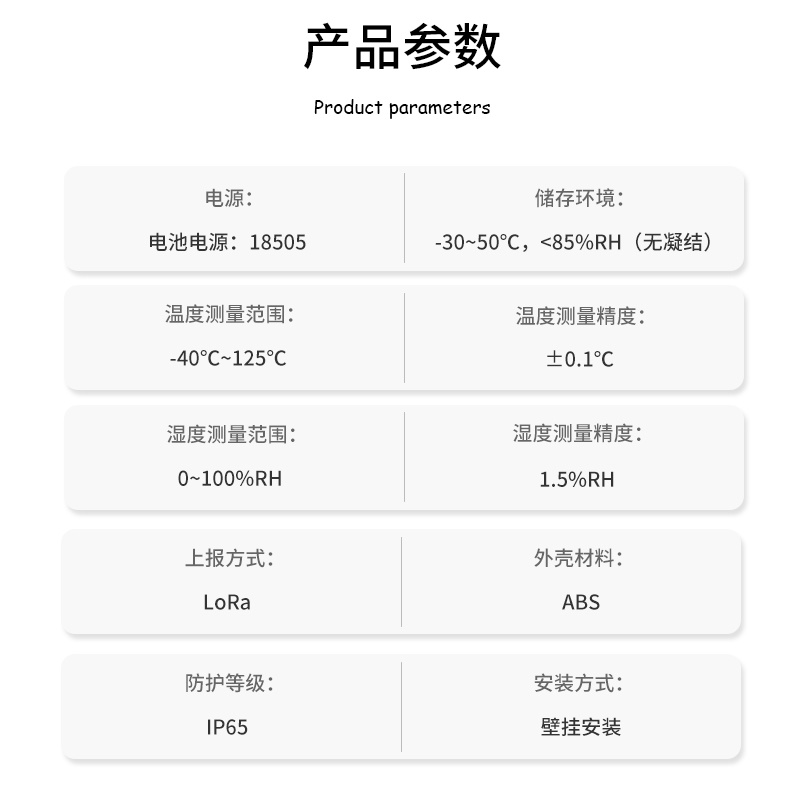
1. 24/7 uninterrupted protection: possessing ±0.1℃ and ±1.5%RH Sensors with high-precision monitoring capabilities (such as devices that meet industrial-grade standards),
Like a sleepless sentinel, it continuously monitors every moment of environmental change within cold storage facilities, refrigerated trucks, and transport containers. Should temperature or humidity deviate from the preset safety thresholds,
(such as temperature >5°C, humidity <85% RH), the system triggers an immediate alarm, enabling management personnel to respond within seconds and nip losses in the bud.
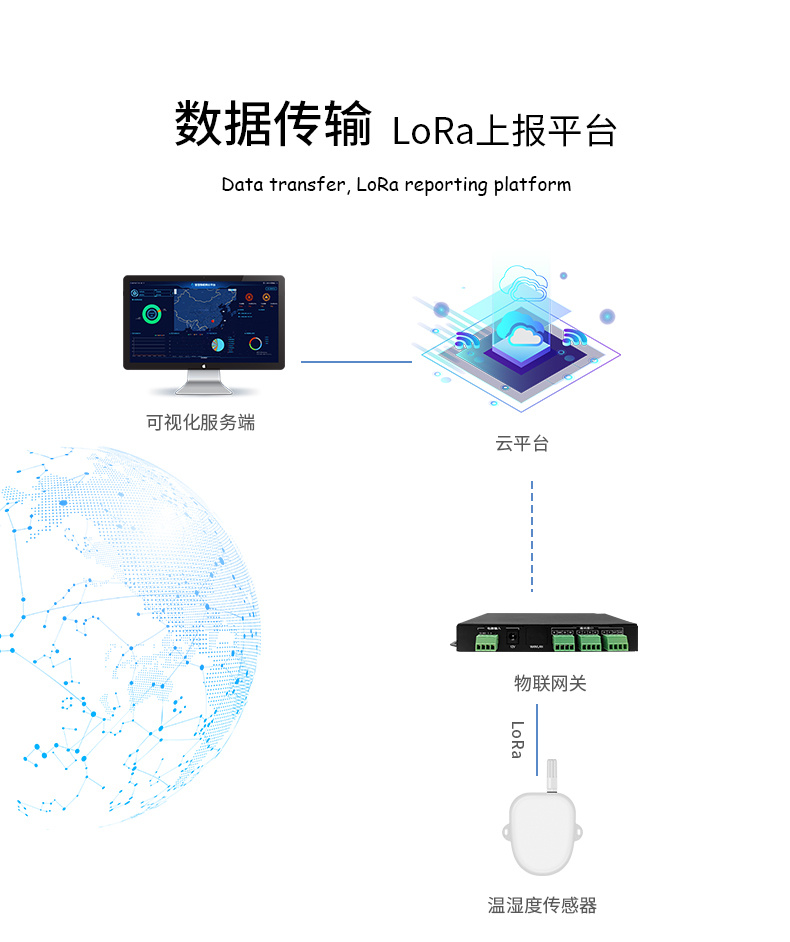
2. Break through spatial barriers and achieve global control: Adopt LoRa/LoRaWAN/CAT1 With wireless transmission technology, sensors eliminate the need for complex wiring.
This enables stable data transmission back to the cloud or a local gateway. Regardless of where the lychees are stored in the cold storage—especially in areas prone to temperature fluctuations, such as near the entrance or in corners—
Even while still en route on long-haul transport, managers can access the platform. One-Page Overview Real-time data and historical trend curves from all monitoring points eliminate monitoring blind spots once and for all.
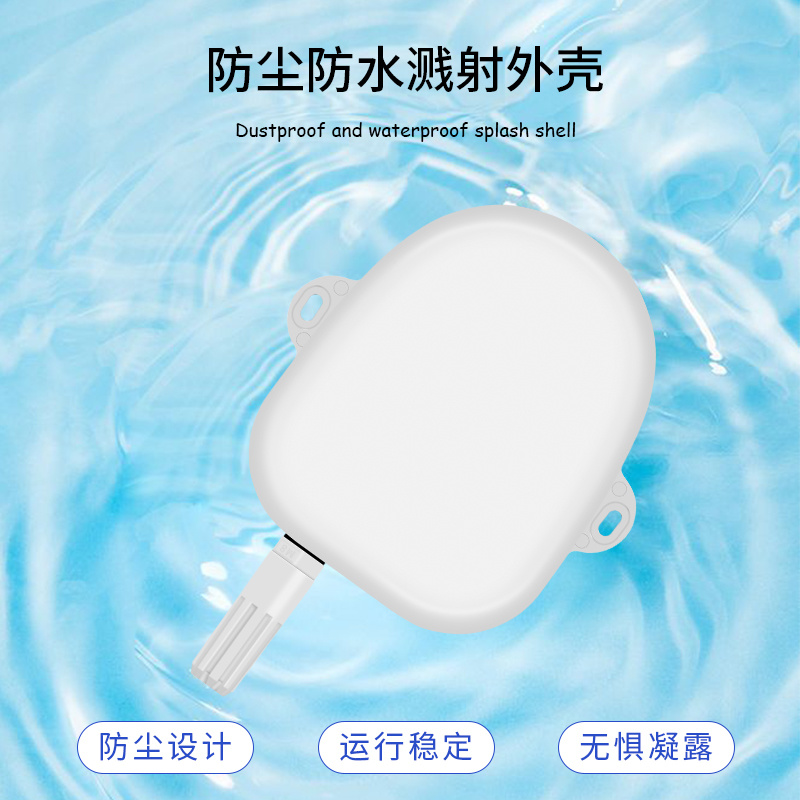
3. Stable and reliable, resilient to harsh environments: The optimal storage conditions for lychees are low temperature and high humidity. Employing… ABS material housing and possess IP67-rated protection of the sensor,
It can effectively resist the low temperature, high humidity, and potential condensation erosion of cold storage facilities, ensuring that the equipment remains… -40℃ to 125℃ Long-term stable operation over a wide temperature range.
Ultra-low-power design (Standby current <5 µA) and As long as 2–3 years of battery life , significantly reducing the frequency of equipment maintenance and ensuring continuous, effective monitoring.
of the cold chain “Guardian Escort” — Temperature and Humidity Sensor
4. Data-driven empowerment to optimize freshness-preserving decisions: The continuously accumulated big data on temperature and humidity represents a valuable asset for optimizing lychee preservation techniques.
By analyzing the patterns of quality changes in different lychee varieties across various temperature and humidity ranges, it is possible to continuously… Refinement and personalization Set the optimal storage parameters.
At the same time, these data provide irrefutable evidence for tracing the environmental footprint of lychees throughout the supply chain, thereby bolstering consumer trust.
III. From From “Chang’an Post Horses” to “Cloud‑Based Protection”: Technology Empowers the Rebirth of Lychees
In the past, Yang Guifei’s lychees relied on express post horses to race across the land, yet even at great expense, their freshness was hard to guarantee. Today, a wireless temperature‑and‑humidity sensor network spanning every link in the lychee cold chain has woven an invisible… “Huxian.com”:
Origin Pre-cooling Station: After being harvested, lychees are promptly transferred to the pre-cooling stage; sensors ensure that the pre-cooling chamber rapidly and uniformly reduces the fruit temperature to the target level, thereby inhibiting… “Field heat.”
Refrigerated storage: Deploy multiple sensors throughout the large cold storage facility to monitor temperature and humidity uniformity across different zones, thereby preventing localized overheating or overcooling, as well as excessive humidity or dryness.
Cold-chain transportation: Installed at critical locations within the refrigerated compartment, it provides real-time monitoring of environmental stability during transit, ensuring safety especially during vulnerable periods such as loading and unloading, and when doors are opened or closed.
Supermarket freezer /Pre-positioned warehouse: Monitor the environment at sales or temporary storage locations to ensure that, by the time the product reaches the consumer, its quality remains unchanged.
IV. The Future of Smart Freshness: Beyond Temperature and Humidity
Temperature and humidity monitoring is the cornerstone of lychee preservation, but it is by no means the end. Future smart preservation systems may integrate multi-dimensional environmental sensing.
(such as gas composition O₂/CO₂ concentration monitoring, non-destructive detection techniques integrated with the physiological status of lychees, and even AI‑based models for predicting shelf life.
As a foundational data gateway, wireless sensing technology… Reliable, precise, and easy to deploy Its characteristics will continue to provide core support for agricultural product quality management.
Conclusion
Behind the thousand-mile journey of a single lychee lies a meticulous race against time and the elements. Wireless temperature and humidity monitoring technology, working invisibly, quietly safeguards this centuries‑old delicacy.
When the warmth of technology is woven into time-honored industries, the legend of Chang’an lychees endures—not only in poetry and song, but also through each precise adjustment of environmental conditions.
Allow more people to appreciate it. “The flesh is as lustrous and white as ice and snow”—a truly exquisite flavor. This is a vivid testament to how technology empowers modern agriculture while safeguarding nature’s bounties.
To explore the profound impact of temperature and humidity on agricultural product quality, consider LoRa/LoRaWAN/Cat1 temperature and humidity sensors from Hengyi Technology.
It provides precise and reliable environmental monitoring services for a wide range of applications that require temperature and humidity measurement. This sensor employs an industrial-grade chip as its main controller,
It uses LoRa wireless transmission technology to report data in real time and can seamlessly integrate with gateways and cloud platforms for remote management. Its key advantage lies in its low-power design, which extends the device’s service life.
IP67 high protection rating ensures suitability for challenging environments; the eco-friendly ABS housing is safe and durable, with no wiring required and easy installation. It also features highly sensitive detection,
With 24-hour real-time monitoring and low-battery alerts, it delivers a stable and efficient temperature‑and‑humidity monitoring experience, making it the preferred choice for those seeking a reliable environmental monitoring solution.
MORE NEWS
Contact Us
Tel:+86-189-23711266 400-1273-421
E-mail:liulin@rf-md.com
Shenzhen office: 506-509, zone 1, block B, Huayuan science and Technology Innovation Park, No. 168, Baoyuan Road, Xixiang, Bao'an District, Shenzhen
Changsha Branch: 21d, building F4, Lugu enterprise Plaza, No. 27, Wenxuan Road, Yuelu District, Changsha

Follow us
-

E-mail:
yangyalan@rf-md.com
-

Tel:
+86-755-23284193
-
