
How to choose the right UV‑light detection equipment?
Release time:
2025-09-08
In today’s world, where health and safety are increasingly prioritized, monitoring light levels and ultraviolet radiation intensity has become a fundamental requirement across numerous industries. Selecting the right light and UV‑radiation monitoring device not only ensures data accuracy but also directly impacts the scientific rigor and effectiveness of environmental management. This article systematically examines how to choose an appropriate monitoring instrument, considering technical specifications, application scenarios, communication protocols, and other key factors.
How to choose the right one Ultraviolet Light Detection Equipment?
Light and ultraviolet‑radiation monitoring equipment plays a vital role in numerous sectors, including agriculture, healthcare, warehousing, and public spaces. Selecting the right device to meet your specific needs not only enhances monitoring efficiency but also provides reliable data to support environmental management. This article offers guidance on equipment selection from multiple perspectives.

I. Clarify Testing Requirements
Before selecting equipment, you should first clearly define the specific targets to be monitored and the environmental conditions. For example:
Light intensity : Must it comply with national hygiene standards (e.g., ≥100 lux in public spaces)?
Ultraviolet intensity : Is it necessary to monitor the UVA/UVB spectral bands? Does the measurement range cover 0–15 mW/cm²?
Application scenarios : Is it for indoor use or outdoor environments? What are the temperature and humidity conditions?

II. Focus on Core Performance Parameters
The equipment’s performance parameters directly determine its suitability and reliability. The following points require particular attention:
1. Measurement Range and Accuracy
Illuminance shall range from 0 to 65,535 lx, with an accuracy of no less than ±4%.
The recommended UV intensity range is 0–15 mW/cm², with a resolution of at least 0.01 mW/cm² and an accuracy better than ±10% of full scale.
2. Wavelength Range
The ultraviolet detection wavelength range should span 240–370 nm to ensure accurate response across common UV bands.
3. Environmental Adaptability
The device shall operate reliably in ambient conditions ranging from −10°C to 60°C and 5% to 80% relative humidity, accommodating most indoor and outdoor environments.
III. Selection of Communication Methods
Modern testing equipment typically supports multiple data upload methods; the appropriate method should be selected based on the actual network conditions.
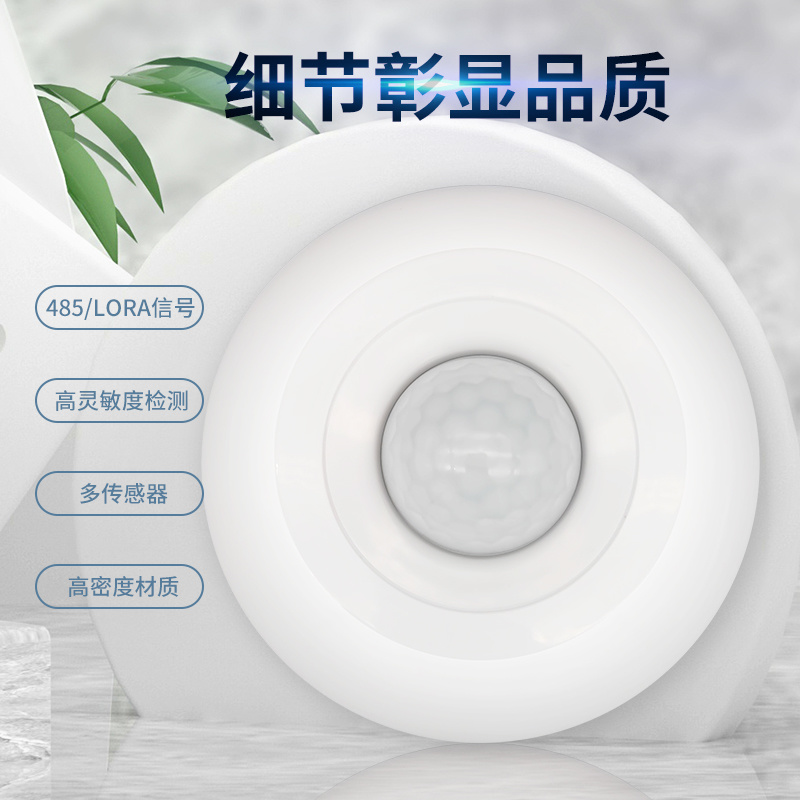
RS485 wired communication : Suitable for fixed installations in locations where wiring is convenient, it supports the Modbus protocol, making it easy to integrate into existing control systems.
LoRa wireless communication : Suitable for large-scale, multi-node, low-power applications, with a transmission range of up to 5,000 meters in open environments, ideal for agriculture, warehousing, and similar scenarios.
IV. Ease of Installation and Maintenance
The equipment’s installation method, structural design, and maintenance costs are also factors to consider during the selection process.
The enclosure shall feature a rational structure and a high degree of protection to extend its service life.
Supports LED status indicators, facilitating on-site assessment of the device’s operating condition.
Provides clear documentation of the communication protocol and supports remote configuration and management.
V. Compliance and Standard Support
Ensure that the equipment complies with relevant industry standards, such as the hygiene standard for illuminance in public spaces, and supports common communication protocols (e.g., Modbus) to facilitate system integration and seamless connectivity with data platforms.
VI. Recommended Use Cases
Depending on the specific usage environment, please refer to the following recommendations:
Public places / schools / hospitals : Emphasize monitoring of light intensity, ensuring compliance with hygiene standards; high-precision devices with RS485 communication are recommended.
Agriculture/Warehousing : Requires large-scale, multi-node monitoring; LoRa wireless devices are recommended, supporting long-distance transmission.
Factory/Laboratory : High precision is required for UV intensity monitoring, necessitating instruments with broad wavelength coverage and high spectral resolution.
VII. Data Management and Platform Integration
Choose devices that support standard communication protocols (such as Modbus) to seamlessly integrate with IoT platforms, enabling data visualization, historical data retrieval, alarm configuration, and other features to enhance management efficiency.
VIII. Summary
When selecting UV‑light detection equipment, it is essential to comprehensively consider factors such as measurement accuracy, communication protocols, environmental adaptability, and ease of installation and maintenance. An outstanding device not only delivers precise data but also offers robust scalability and stability, thereby supporting intelligent, science‑based environmental monitoring and management.
Light and Ultraviolet Radiation Detection Equipment It is playing an increasingly important role in modern environmental monitoring. By making informed equipment selections, users can maximize system performance, provide a reliable data foundation for diverse applications, and advance the level of intelligent management.
MORE NEWS
Contact Us
Tel:+86-189-23711266 400-1273-421
E-mail:liulin@rf-md.com
Shenzhen office: 506-509, zone 1, block B, Huayuan science and Technology Innovation Park, No. 168, Baoyuan Road, Xixiang, Bao'an District, Shenzhen
Changsha Branch: 21d, building F4, Lugu enterprise Plaza, No. 27, Wenxuan Road, Yuelu District, Changsha
Follow us
-

E-mail:
yangyalan@rf-md.com
-

Tel:
+86-755-23284193
-
