
Must indoor lighting comply with regulations? A multi‑scenario practical approach to UV‑light detection in lighting.
Release time:
2025-09-09
Compliance with indoor lighting standards is a critical prerequisite for safeguarding human health and ensuring the orderly conduct of production and operations. Whether in everyday living, public activities, or specialized professional tasks, inadequate lighting can give rise to a host of problems. Ultraviolet Light Detection As a key tool for ensuring indoor lighting compliance, it provides precise data support across diverse settings. Tailored practical solutions for light and ultraviolet‑radiation monitoring have been developed for sectors such as agriculture, forestry, and public spaces, helping to achieve indoor lighting compliance.
Core criteria for indoor lighting compliance
China has established clear illumination‑intensity standards for various indoor settings, using lux as the primary unit of measurement and specifying requirements for ultraviolet intensity, light uniformity, color rendering index, and other parameters. In residential spaces, living rooms should maintain an illuminance of 100–300 lux, while bedrooms require 50–150 lux. In educational environments, classroom desk surfaces must achieve at least 300 lux, with a light uniformity ratio of no less than 0.7. In office areas, standard workstations should be illuminated at 150–300 lux, whereas high‑demand zones such as design and drafting areas require 500 lux or more. In healthcare settings, hospital wards should have a daytime illuminance of no less than 200 lux, while operating rooms must provide at least 10,000 lux in the surgical field, with a color rendering index that meets the precision requirements of medical procedures. These standards provide a clear basis for compliance‑based lighting assessments across different applications.
Core Features and Analytical Value of UV Light Meters
Equipped with a highly sensitive optical sensor, the UV‑light detector can simultaneously and accurately capture and measure both ultraviolet and visible light. In UV detection, it covers the critical 240–370 nm wavelength range, enabling differentiation of UV intensity across various bands; for visible‑light measurement, it leverages the photoelectric effect of its photosensitive element to convert light intensity into intuitive numerical readings. An onboard microprocessor rapidly processes the detected signals and displays precise data on the screen, while some models also feature data storage and remote transmission capabilities. With such instruments, users can monitor indoor lighting parameters in real time, verify compliance with relevant standards for specific environments, promptly identify lighting deviations, and make timely adjustments—providing scientific, reliable technical support for ensuring indoor lighting meets regulatory requirements.
Practical Plan for UV Detection under Multi-Scene Illumination Conditions
Agricultural and Forestry Scenarios

In indoor agricultural and forestry settings—such as crop cultivation and seedling production—light is a critical factor influencing the growth and development of crops and seedlings. UV‑light monitoring should focus on both light intensity and the spectral distribution of ultraviolet wavelengths. During measurements, sampling points should be strategically placed across different zones within greenhouses, seedling nurseries, and similar spaces to ensure comprehensive coverage of key growth areas, thereby minimizing data bias caused by insufficient sampling. Measurement frequency should be adjusted in accordance with the crop’s growth cycle, with more frequent assessments during critical developmental stages to track real-time changes in light intensity. At the same time, attention should be paid to UV‑radiation levels to prevent excessive UV exposure from adversely affecting leaf health and seedling growth. By ensuring that light parameters comply with relevant agricultural and forestry standards, an optimal photic environment can be maintained for crop and seedling development.
Public space scenario
In public spaces such as shopping malls, libraries, waiting rooms, and hotel lobbies—where foot traffic is high and functional requirements vary—compliance with lighting standards directly impacts users’ experience and safety. During inspections, measurement points should be strategically placed according to the distinct functional zones of each space, including shelf areas in malls, reading areas in libraries, and circulation zones in waiting rooms. Throughout the assessment, it is essential to monitor lighting variations across different times of day, particularly in areas heavily influenced by natural light, to prevent non‑compliant illumination levels due to temporal differences. At the same time, uniformity of illumination must meet established standards, avoiding excessively bright or dim spots, thereby ensuring both comfort and safety for occupants. Through precise measurement and targeted adjustments, compliance with lighting regulations in public environments can be effectively achieved.
Medical domain scenarios
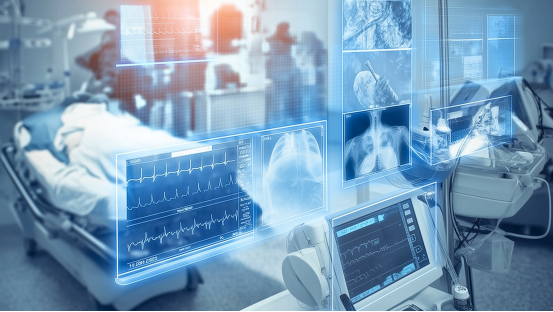
In medical settings, indoor spaces such as patient wards, operating rooms, and treatment rooms have extremely stringent lighting requirements. Compliance with these standards directly impacts patient outcomes, recovery, and the precision of medical procedures. During inspections, high‑precision illuminance and ultraviolet‑radiation meters must be employed. In patient wards, particular attention should be paid to measuring light levels both during the day and at night to ensure they meet the needs of rest and rehabilitation. In operating rooms, in addition to verifying that illuminance reaches at least 10,000 lux, it is also essential to monitor the color rendering index to guarantee the accuracy of surgical procedures. For treatment areas—such as phototherapy units—precise measurements of UV intensity within specific wavelength bands are required to ensure adherence to therapeutic protocols. Testing should be conducted across multiple phases—before, during, and after medical procedures—to promptly identify and correct any deviations in lighting parameters, thereby ensuring compliance with regulatory standards in clinical environments.
Warehousing scenario

In warehouse settings, different types of stored goods—such as pharmaceuticals, food products, chemicals, and textiles—have varying lighting requirements. Non‑compliant illumination can lead to product degradation or damage, compromising storage quality and safety. During inspections, detection points should be strategically placed throughout the warehouse based on the characteristics of the stored items, with particular attention paid to areas near doors, windows, and lighting fixtures, as well as elevated shelf locations that are especially susceptible to light exposure. Key metrics to monitor include light intensity: for example, light‑sensitive pharmaceutical storage areas must maintain illumination below 50 lux, while food warehouses should operate within a range of 200–500 lux. Additionally, UV radiation levels should be closely tracked to prevent ultraviolet exposure from accelerating oxidation and spoilage. Regular assessments of both visible light and UV levels, coupled with timely adjustments to indoor lighting conditions, ensure compliance with regulatory standards and safeguard the quality of stored goods.
Environmental monitoring scenario

In indoor spaces such as research laboratories and ecological research centers within the environmental monitoring field, light exposure is one of the key monitoring parameters; variations in lighting conditions can affect experimental outcomes and the accuracy of ecological data. During measurements, it is essential to establish monitoring points in critical areas of the laboratory—such as workstations and sample‑culturing zones—based on the specific monitoring objectives and experimental requirements. In addition to measuring light intensity, it is also necessary to concurrently record relevant environmental parameters, including time, temperature, and humidity, to analyze the relationships between illumination and other environmental factors and to assess trends in light‑related changes. Through long-term, continuous monitoring of ultraviolet radiation, precise and comprehensive lighting data can be provided for environmental monitoring, ensuring that light levels during experiments and studies comply with regulatory standards and thereby safeguarding the accuracy and reliability of the monitoring results.
Key Considerations for Selecting Devices to Support Compliance Testing Across Multiple Scenarios
When selecting a light‑intensity and ultraviolet‑radiation detector, priority should be given to ensuring that the instrument’s specifications align with the applicable compliance standards for each specific setting. In terms of measurement range, the device must cover the relevant intensity spectrum for the intended application—for example, medical settings require instruments with an accuracy of ±2%, while general‑purpose applications should maintain accuracy within ±4%. The UV detection wavelength range should span 240–370 nm to reliably measure key UV bands. Additionally, environmental robustness must be considered: in cold‑storage environments, equipment capable of stable operation at temperatures as low as −10°C is essential; for public‑space monitoring, portable models that facilitate easy relocation across different areas are preferable. By comprehensively evaluating performance, choose a device that can meet the diverse requirements of light‑intensity compliance testing across multiple scenarios.
Implementation and Optimization Recommendations for Multi-Scene Lighting Compliance Testing
When conducting multi‑scenario UV‑lighting inspections, it is essential to develop a comprehensive inspection plan that clearly defines the inspection cycle for each scenario, the rules for locating test points, and the specific measurement criteria, thereby ensuring the orderly execution of the work. During the inspection process, strict adherence to equipment operating procedures is required to minimize human error and safeguard the accuracy of the data. Upon completion, the collected data should be promptly analyzed to determine whether the lighting conditions comply with regulations; if deviations are detected, measures such as adjusting the power and positioning of luminaires or installing additional shading devices should be implemented, tailored to the specific characteristics and requirements of each scenario, to optimize the lighting environment. In addition, regular calibration and maintenance of the testing equipment are necessary to ensure stable performance and provide reliable support for future inspections. Furthermore, an archive of lighting‑inspection data can be established, recording illumination parameters across different periods for each scenario. By analyzing this data, trends in lighting changes can be identified, offering valuable insights for long‑term compliance management and enabling continuous improvements to the lighting environment, thus ensuring that indoor lighting in all scenarios consistently meets regulatory standards.
Summary
Compliant indoor lighting is essential for the operations and development of various sectors, as well as for people’s health and well-being. Ultraviolet Light Detection It is a core approach to ensuring compliance with lighting standards. For diverse settings—including agriculture, forestry, public spaces, medicine, warehousing, and environmental monitoring—scientific testing protocols must be tailored to the specific regulatory requirements and operational needs of each context, with appropriately matched measurement instruments selected. Through precise assessments and timely adjustments, indoor lighting can be kept in compliance. As technology continues to advance, UV‑light measurement devices will become increasingly intelligent and accurate, providing stronger support for lighting compliance across multiple applications and helping various sectors achieve greater progress within compliant lighting environments.
MORE NEWS
Contact Us
Tel:+86-189-23711266 400-1273-421
E-mail:liulin@rf-md.com
Shenzhen office: 506-509, zone 1, block B, Huayuan science and Technology Innovation Park, No. 168, Baoyuan Road, Xixiang, Bao'an District, Shenzhen
Changsha Branch: 21d, building F4, Lugu enterprise Plaza, No. 27, Wenxuan Road, Yuelu District, Changsha

Follow us
-

E-mail:
yangyalan@rf-md.com
-

Tel:
+86-755-23284193
-
