
How do temperature and humidity sensors safeguard industrial manufacturing?
Release time:
2025-09-10
In industries such as manufacturing, agricultural farming, warehousing and logistics, and even cultural heritage preservation, precise monitoring of ambient temperature and humidity is essential for ensuring quality and safety. As silent guardians, how do temperature and humidity sensors, through stable and reliable data acquisition, lay a solid foundation for the refined and intelligent management of modern industrial production? This article will delve into their irreplaceable core value.
How do temperature and humidity sensors safeguard industrial manufacturing?
In modern industrial manufacturing systems, the stability of the production environment is one of the key factors determining product quality, production efficiency, and equipment safety. As precision instruments that sense environmental changes, temperature and humidity sensors continuously collect data in real time with high accuracy, thereby establishing an invisible safeguard for the stable operation of industrial processes. Their protective role manifests across multiple levels.
- Ensuring the precision of manufacturing processes and product consistency.

Many industrial manufacturing processes impose extremely stringent requirements on the temperature and humidity of the production environment. Whether it is the fabrication of precision electronic components, the synthesis and packaging of pharmaceuticals, or advanced coating and composite‑material curing, even minor environmental fluctuations can lead to changes in molecular structure, alterations in chemical reaction rates, or deviations in physical properties—ultimately resulting in batch‑to‑batch variability and, in some cases, failure to meet performance specifications for entire batches. By providing continuous 24/7 monitoring, temperature and humidity sensors keep environmental parameters tightly within the process window, ensuring consistent and stable production conditions and thereby safeguarding product quality and uniformity from the outset.
- Maintain the normal operation and service life of production equipment.
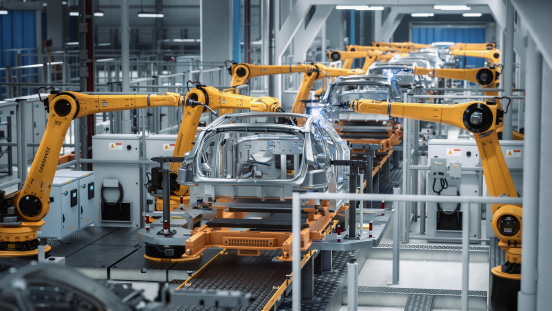
High humidity in industrial environments can cause condensation on equipment surfaces, leading to corrosion of metal components and short circuits in electrical circuits. Conversely, excessively dry conditions may generate static electricity, posing a potential threat to precision CNC machine tools, integrated circuit boards, and other sensitive equipment. Temperature and humidity sensors can promptly detect such abnormal conditions and, when linked with the environmental control system, automatically activate dehumidification, humidification, or ventilation devices to maintain the environment within the optimal operating range for the equipment. This proactive maintenance approach effectively prevents unplanned downtime and extends the service life of costly production assets.
- Ensure the safe storage of raw materials and finished products.
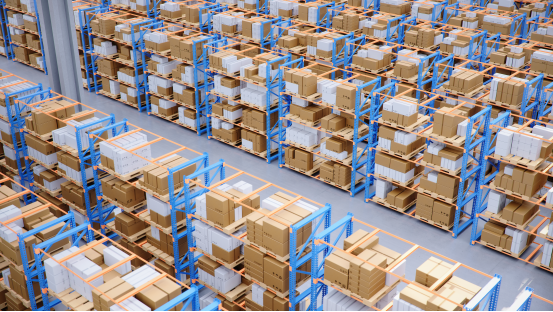
From incoming raw materials and semi-finished goods to finished products awaiting shipment, the storage environment in industrial warehouses is of paramount importance. Certain chemical raw materials and powdered substances are highly sensitive to humidity; once they absorb moisture, they may cake, degrade, or even pose safety risks. Metal products, meanwhile, undergo accelerated oxidation in humid air, while textiles and paper products are particularly susceptible to fluctuations in humidity. A monitoring network composed of temperature and humidity sensors can comprehensively cover every area of the warehouse, providing real-time environmental data to ensure that storage conditions consistently meet regulatory standards, thereby preventing material degradation and economic losses caused by environmental factors.
IV. Providing a Data Foundation for Industrial Intelligence and Digitalization
At the heart of Industry 4.0 and smart manufacturing lies data-driven decision-making. Temperature and humidity data, as critical environmental parameters, are an indispensable component of factory digitalization models. Both historical and real-time data can be leveraged for big‑data analytics, enabling engineers to optimize process flows, predict equipment maintenance schedules, and achieve granular energy management—such as intelligently adjusting HVAC systems in response to ambient conditions. Stable, reliable sensor data serves as the foundational backbone for building transparent, controllable, and highly efficient smart factories.
Beyond Industry: A Broad Application Ecosystem
The protective value of temperature and humidity sensors extends far beyond industrial manufacturing. They have been integrated into numerous critical sectors that underpin national development, public welfare, and cultural heritage.
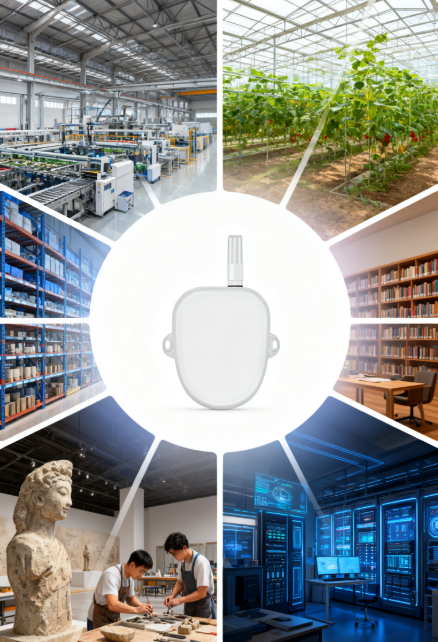
In Agricultural farming In this field, sensors monitor the environmental conditions inside greenhouses and livestock and poultry houses, creating optimal growing conditions for crops or reducing the risk of animal and poultry diseases, thereby enhancing agricultural productivity.
In Warehousing and logistics In particular, for cold-chain logistics, sensors serve as “electronic enforcers,” ensuring that the temperature and humidity levels of pharmaceuticals and fresh food remain compliant throughout the entire process—from storage to transportation—thereby safeguarding product quality and safety.
In Library, archive, museum In venues such as cultural heritage preservation sites, sensors silently safeguard precious paper documents, ancient books, and cultural relics, protecting them from excessive dryness or dampness and mold, thereby preserving humanity’s cultural memory.
In Data center , Large server clusters generate substantial heat and are highly sensitive to temperature and humidity. Sensors help precision air-conditioning systems maintain the environment within optimal ranges, preventing servers from shutting down due to overheating or from condensation caused by excessive humidity, thereby ensuring the smooth and secure flow of data worldwide.
Conclusion
Though compact, temperature and humidity sensors are critical sensing nodes in modern industrial systems. With their stability, reliability, and precision, they seamlessly integrate into every stage of industrial manufacturing and beyond, providing indispensable environmental data that serves as a cornerstone for ensuring quality, boosting efficiency, mitigating risks, and enabling intelligent operations. As IoT technologies continue to evolve, the profound value these sensors bring to diverse industries will only grow more evident.
MORE NEWS
Contact Us
Tel:+86-189-23711266 400-1273-421
E-mail:liulin@rf-md.com
Shenzhen office: 506-509, zone 1, block B, Huayuan science and Technology Innovation Park, No. 168, Baoyuan Road, Xixiang, Bao'an District, Shenzhen
Changsha Branch: 21d, building F4, Lugu enterprise Plaza, No. 27, Wenxuan Road, Yuelu District, Changsha

Follow us
-

E-mail:
yangyalan@rf-md.com
-

Tel:
+86-755-23284193
-
