
Why can’t agricultural farming do without temperature and humidity sensors?
Release time:
2025-09-11
Why can’t agricultural farming do without temperature and humidity sensors?
As agricultural modernization accelerates, the traditional approach of relying on human expertise to assess environmental conditions can no longer meet the demands of large-scale, intensive farming. Temperature and humidity sensors, as efficient and precise tools for environmental monitoring, are emerging as “environmental guardians” in modern livestock operations, helping farmers adopt data-driven management practices and enhancing both production efficiency and animal welfare.
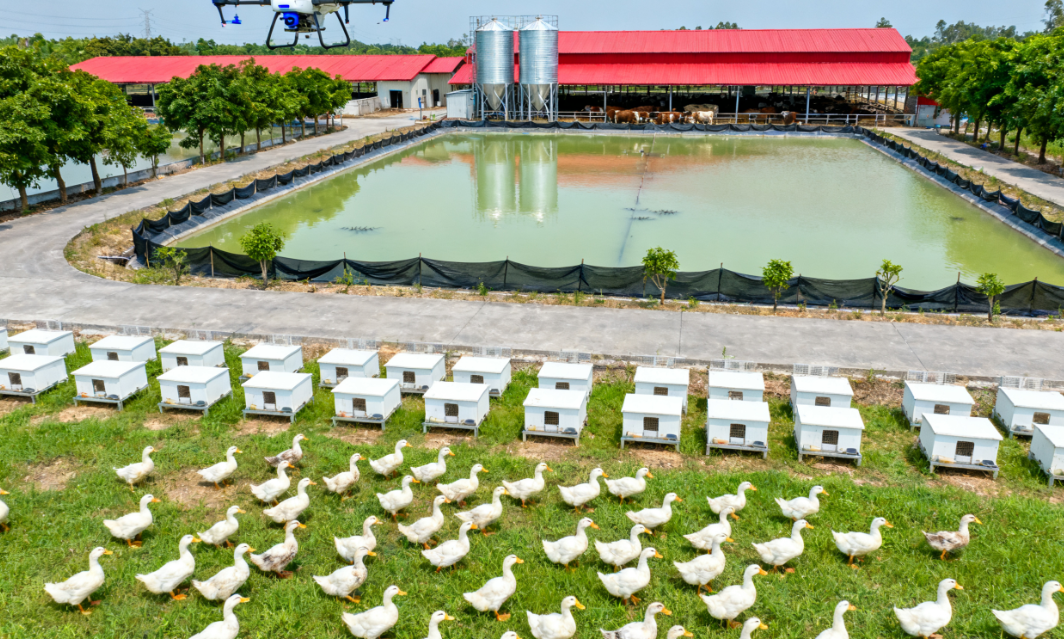
I. The Importance of Temperature and Humidity in Agricultural and Livestock Production
Temperature and humidity are the two fundamental environmental factors that influence the growth of plants and animals. In livestock and poultry farming, an optimal temperature can stimulate feed intake and boost immunity, while excessive humidity can promote bacterial proliferation and disease transmission. In greenhouse cultivation, crop photosynthesis, respiration rates, and transpiration are all directly affected by temperature and humidity. If environmental conditions spiral out of control, not only will growth and development be impaired, but widespread outbreaks of disease may also occur, resulting in significant economic losses.
II. The Core Role of Sensors in Environmental Monitoring
Temperature and humidity sensors collect environmental data in real time and continuously, enabling livestock farmers to accurately monitor microclimatic conditions within barns, greenhouses, or aquaculture facilities. Compared with manual measurements, these sensors offer advantages such as rapid response, high accuracy, and the absence of human intervention, allowing for the timely detection of anomalies and the issuance of early warnings, thereby providing a reliable basis for controlling ventilation, heating, cooling, or humidification systems.
Especially in large-scale farms, relying solely on manual labor makes it difficult to maintain round-the-clock monitoring. The introduction of sensors not only reduces the burden on human workers but also marks a leap from “experience-based farming” to “data-driven farming.”
III. Intelligent aquaculture cannot do without data support.
Modern farming systems are often integrated with IoT platforms. Temperature and humidity sensors, serving as edge‑level devices, wirelessly transmit data to the cloud or a local gateway, enabling users to remotely access historical trends and real-time conditions via smartphone or computer. Leveraging data analytics, the system can also automatically trigger equipment adjustments—such as activating fans, opening wet curtains, or controlling heating—to deliver truly intelligent environmental management.
This closed-loop management system—comprising monitoring, analysis, and execution—has significantly enhanced the controllability and stability of agricultural production, playing a particularly critical role in settings such as high-density aquaculture and soilless cultivation.
- Adapting to Diverse Agricultural Scenarios

Temperature and humidity sensors are not only suitable for traditional poultry and livestock farming but can also be widely applied in aquaculture, mushroom cultivation, greenhouse management, grain storage, and many other fields. Since different organisms have distinct environmental requirements, these sensors allow users to set customized thresholds for various settings, enabling tailored management. For example, in aquaculture, it is essential to maintain stable air humidity around the water body, while in layer houses, precise temperature control is critical to prevent a decline in egg production.
V. Supporting Green and Sustainable Development
Precise environmental control not only enhances production efficiency but also promotes resource conservation and environmental protection. By avoiding excessive heating, cooling, or ventilation, energy waste can be significantly reduced. Moreover, effective environmental management helps lower the use of veterinary drugs and chemical fertilizers, thereby advancing the development of sustainable agriculture.
VI. Conclusion
Agricultural farming is steadily advancing toward greater precision and intelligence. As a fundamental tool for environmental monitoring, temperature and humidity sensors not only enhance the scientific rigor and efficiency of production management but also inject technological momentum into the sustainable development of the livestock and aquaculture sectors. Looking ahead, as sensor technologies, communication protocols, and AI algorithms continue to converge, agricultural environmental control will become even more automated and intelligent, empowering traditional agriculture to reinvent itself.
MORE NEWS
Contact Us
Tel:+86-189-23711266 400-1273-421
E-mail:liulin@rf-md.com
Shenzhen office: 506-509, zone 1, block B, Huayuan science and Technology Innovation Park, No. 168, Baoyuan Road, Xixiang, Bao'an District, Shenzhen
Changsha Branch: 21d, building F4, Lugu enterprise Plaza, No. 27, Wenxuan Road, Yuelu District, Changsha

Follow us
-

E-mail:
yangyalan@rf-md.com
-

Tel:
+86-755-23284193
-
