
How does a millimeter-wave radar level gauge enable remote water-level monitoring?
Release time:
2025-09-13
How does a millimeter-wave radar level gauge enable remote water-level monitoring?
Introduction
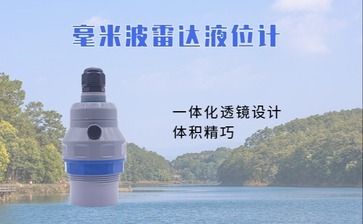
As a high-precision, non-contact water-level monitoring device, millimeter-wave radar level gauges are increasingly becoming a critical tool in smart water management, environmental monitoring, and other fields. Leveraging advanced frequency-modulated continuous-wave (FMCW) technology, they deliver measurement accuracy of ±5 mm and support multiple remote communication protocols, enabling users to monitor water-level fluctuations in real time and with high efficiency, thereby enhancing operational effectiveness and response speed.
How does a millimeter-wave radar level gauge enable remote water-level monitoring?
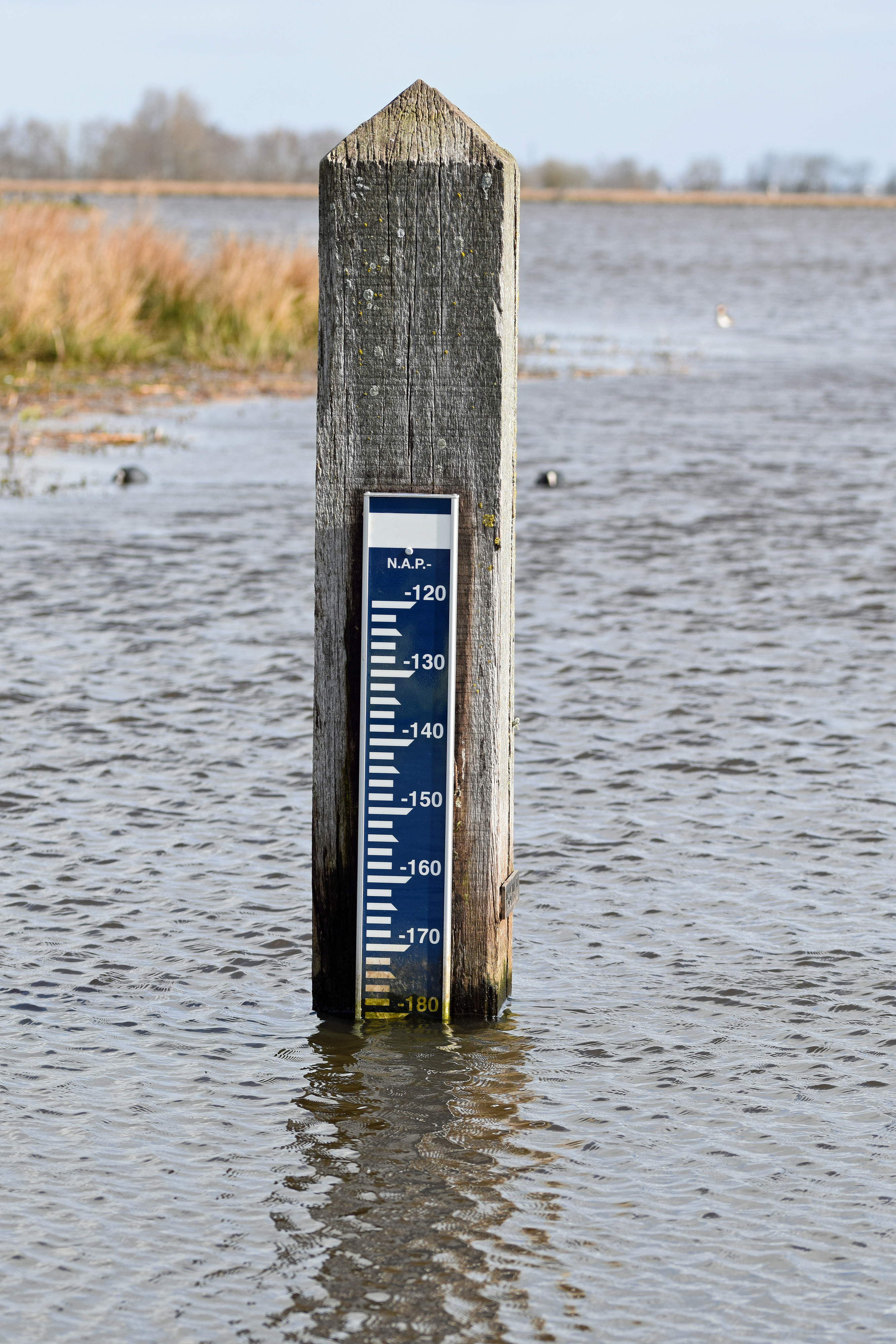
With the rapid advancement of IoT technologies, remote water-level monitoring has become a critical requirement in areas such as water resource management, flood‑prevention early warning, and industrial process control. Millimeter‑wave radar level gauges, owing to their high precision, robust anti‑interference capabilities, and versatile communication options, have emerged as an ideal solution for implementing remote water‑level monitoring. This paper delves into their technical principles, communication protocols, and system integration capabilities, providing readers with a comprehensive understanding of their practical value.
I. Technical Principles and Performance Advantages
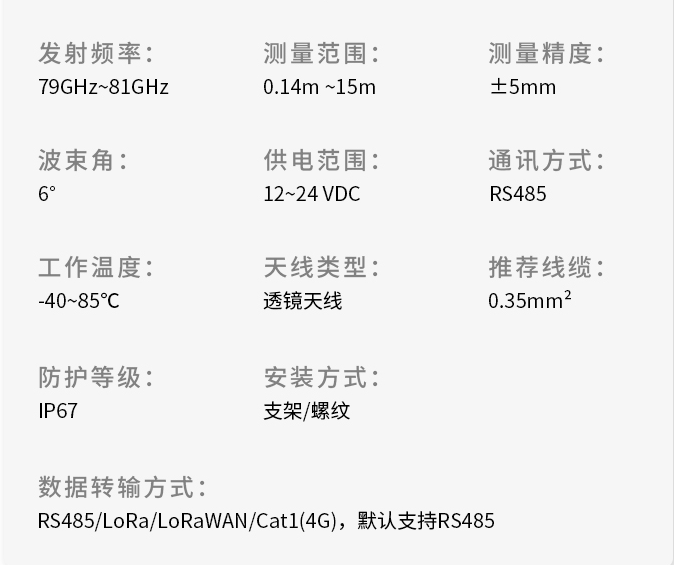
The millimeter-wave radar level transmitter employs 79–81 GHz high‑frequency frequency-modulated continuous wave (FMCW) technology, calculating the liquid level height by transmitting and receiving millimeter-wave signals. Its measurement range spans from 0.14 m to 15 m, with a minimum blind zone of just 14 cm, a resolution as fine as 1 mm, and an accuracy of ±5 mm. The high frequency and wide bandwidth enable it to penetrate fog, steam, and small amounts of foam, making it well suited for liquid-level monitoring in complex environments.
In addition, the product features an integrated lens design, a compact footprint, and easy installation, supporting both bracket‑mount and threaded‑mount options. With no on‑site wiring required, it significantly reduces deployment costs and time. Its IP68 rating ensures reliable, long‑term operation in harsh environments characterized by high humidity and heavy dust.
II. Multi-Mode Remote Communication Capability
Millimeter-wave radar level gauges support multiple communication protocols, allowing users to make flexible selections based on their specific application scenarios:
- LoRa/LoRaWAN communication
The device supports the 470 MHz frequency band (customizable) and offers a maximum transmission range of up to 5,000 meters in open environments. With low power consumption, it is well suited for wide-area coverage in scenarios without public network access, such as mountainous reservoirs and remote river channels.
- RS485 wired communication
Data transmission is implemented via the Modbus protocol, supporting functions such as reading real-time distance values from registers, setting alarm thresholds, and upgrading firmware. Communication parameters can be flexibly configured to meet the requirements of various industrial environments.
- 4G CAT1 network
Suitable for scenarios requiring real-time big data transmission, it supports the MQTT protocol and features offline data logging; upon network recovery, it automatically resends missed data, ensuring data integrity.
- Relay and 4–20 mA output
Optional relay‑output switch signals and 4–20 mA analog signals are available, facilitating integration with industrial control systems such as PLCs and DCSs to enable alarm control and interlocked operations.
III. Intelligent Functions and System Integration
The device not only supports real-time data acquisition but also features a range of intelligent functions:
Alarm Threshold Settings Users can set alarm thresholds via remote communication. When the water level is abnormal, the system automatically triggers an alarm and reports the event through LoRa, 4G, or other methods.
Firmware Remote Upgrade : Supports upgrading the system and radar firmware via RS485, LoRa, or 4G, eliminating the need for on-site operations and reducing maintenance costs.
Data Passthrough and Protocol Compatibility: Supports the Modbus standard protocol, facilitating integration with third-party platforms or custom host‑computer systems.
IV. Integration of the Visual Monitoring System
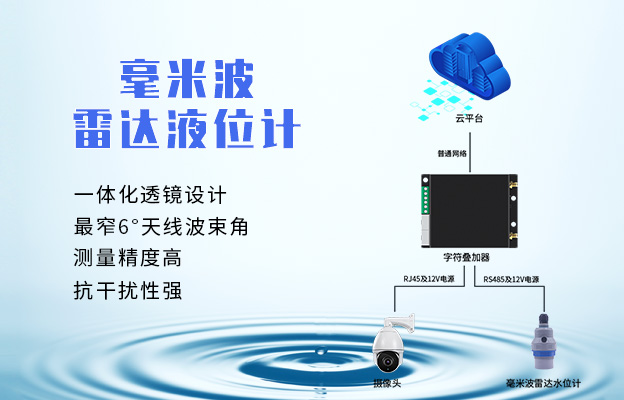
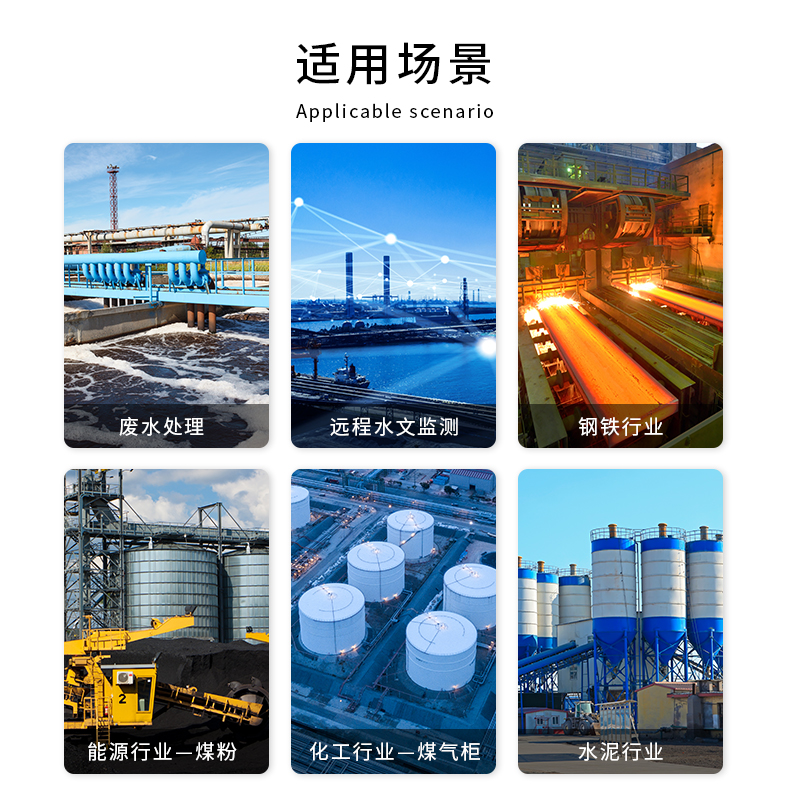
Millimeter-wave radar level gauges can be integrated with our company’s character overlay devices, cameras, and other equipment to create end-to-end solutions for the water‑conservation sector. The system leverages RS485 communication and power‑supply interlocking to enable multi‑dimensional monitoring of water level, flow velocity, and flow direction. Data is uploaded in real time to a big‑data platform, generating visualized water‑level monitoring dashboards that enhance operational efficiency and decision‑making support.
V. Installation and Maintenance Recommendations
To ensure measurement accuracy, please observe the following during installation:
Keep the device perpendicular to the water surface and avoid tilting.
Avoid obstacles within the beam’s coverage area (such as well walls or shorelines); a clearance of more than 20 cm from the wall is recommended.
During the installation of underground utility networks, cables should be positioned as close to the center of the manhole as possible to minimize signal interference.
The device features a low‑power design with a service life exceeding three years; when not in use for extended periods, it is recommended to remove it and store it in a dry environment. Routine maintenance is straightforward, with no need for frequent calibration, significantly reducing operational and maintenance overhead.
VI. Conclusion
Millimeter-wave radar level gauges, by integrating high-frequency radar technology with multi‑mode communication capabilities, offer users a high‑precision, highly reliable solution for remote water‑level monitoring. Their broad range of applications, flexible integration options, and low‑power consumption make them an essential tool in smart water management, industrial automation, environmental monitoring, and other fields. As the technology continues to evolve and application scenarios expand, millimeter-wave radar level gauges will unlock even greater value across more domains, driving the advancement of intelligent water‑level management.
MORE NEWS
Contact Us
Tel:+86-189-23711266 400-1273-421
E-mail:liulin@rf-md.com
Shenzhen office: 506-509, zone 1, block B, Huayuan science and Technology Innovation Park, No. 168, Baoyuan Road, Xixiang, Bao'an District, Shenzhen
Changsha Branch: 21d, building F4, Lugu enterprise Plaza, No. 27, Wenxuan Road, Yuelu District, Changsha
Follow us
-

E-mail:
yangyalan@rf-md.com
-

Tel:
+86-755-23284193
-
