
How impressive are wireless temperature sensors? They’re the go-to solution for monitoring temperatures in distribution cabinets and cables—safe and highly efficient.
Release time:
2025-10-11
How impressive are wireless temperature sensors? They’re the go-to solution for monitoring temperatures in switchgear and cables, delivering both safety and efficiency.
Introduction
In power system operations, maintaining stable temperatures in distribution cabinets and cables is essential for ensuring equipment safety. Traditional temperature‑monitoring methods are often hampered by complex wiring and data‑latency issues, making it difficult to detect overheating faults in real time. By contrast, wireless temperature sensors—featuring real-time monitoring, long‑term data storage, and intelligent interconnection—have become indispensable tools for temperature measurement in distribution cabinets and cables. They not only mitigate safety risks at the source but also significantly enhance operational efficiency, redefining the benchmarks for safety and efficiency in temperature‑monitoring applications.
I. Core Functions of the Wireless Temperature Sensor: Covering the Entire Workflow from “Data Acquisition – Storage – Transmission – Interconnection”
Wireless temperature‑sensing sensors are not standalone temperature‑measurement devices; rather, they constitute an intelligent system that integrates capabilities across multiple stages, establishing a closed loop from data acquisition to anomaly handling and providing comprehensive temperature‑monitoring support for applications such as distribution cabinets and cables.
At the data acquisition level, it supports both wired and wireless connectivity: the wired interface connects to various sensors via RS485 and I/O ports, while the wireless side is compatible with LoRa/LoRaWAN protocols (operating in frequency bands from 31 MHz to 915 MHz, with 470 MHz as the default). This enables seamless integration of multiple sensor types—such as temperature and combined temperature–humidity sensors—without the need for complex wiring. Whether monitoring contact temperatures inside distribution cabinets or real-time cable‑line temperatures, it delivers precise measurements, adapting to the requirements of diverse installation environments.
Data storage and analysis capabilities are key to ensuring long-term reliability. The device features built-in 4G EMMC external storage and 128 MB of RAM, enabling it to retain temperature‑measurement data from multiple sensors for over ten years. Paired with a 1.2 GHz high‑speed CPU, it can rapidly process historical data and promptly identify patterns in temperature changes—meaning that temperature fluctuation trends in distribution cabinets and cables can be fully traced, preventing potential hazards from being overlooked due to data loss or delayed analysis.
The display and operation interface prioritize ease of use, featuring a 10.1-inch TFT true-color touchscreen that supports multiple display modes and can simultaneously present data from up to 16 sensor channels. Operators can switch between live data and historical records with a simple touch, and they can also zoom in or out on the displayed content. With no specialized expertise required, the system is easy to operate, lowering the barrier to on-site maintenance and troubleshooting.
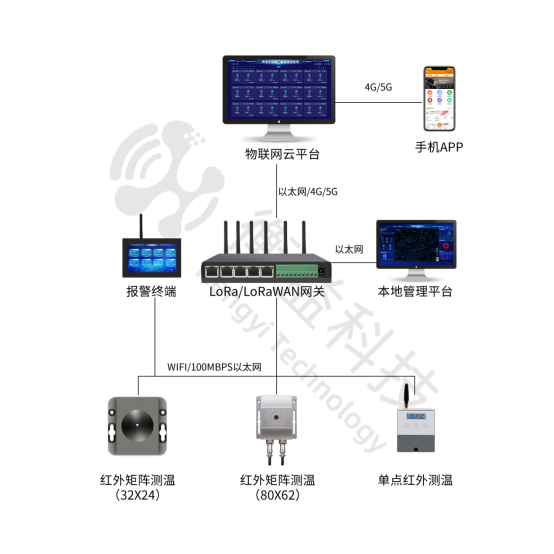
In terms of data transmission, it supports multiple interfaces, including 10/100 Mbps Ethernet and 4G/5G (with 5G support disabled by default), enabling temperature data to be uploaded to an IoT cloud platform or a local management system. Paired with a mobile app for remote access, users can monitor the temperature status of distribution cabinets and cables in real time—even when they are not on site—enabling “remote supervision and instant response.”
More importantly, it features intelligent interconnection: via I/O and RS485 interfaces, it can interface with external control devices such as cooling fans and spray‑water systems. When the temperature of a distribution cabinet or cable exceeds a preset threshold, it automatically initiates cooling measures, enabling rapid response to abnormalities without manual intervention and establishing an automated closed loop of “monitoring–early warning–response,” thereby further enhancing safety‑assurance efficiency.
II. Focusing on Temperature Monitoring of Distribution Cabinets and Cables: The Core of Safety Assurance for Wireless Temperature Sensors
In the context of temperature monitoring for distribution cabinets and cables, the core value of wireless temperature sensors lies in “precise risk prevention and control,” enabling end-to-end mitigation of safety risks caused by equipment overheating—from real-time monitoring to fault‑root‑cause analysis.
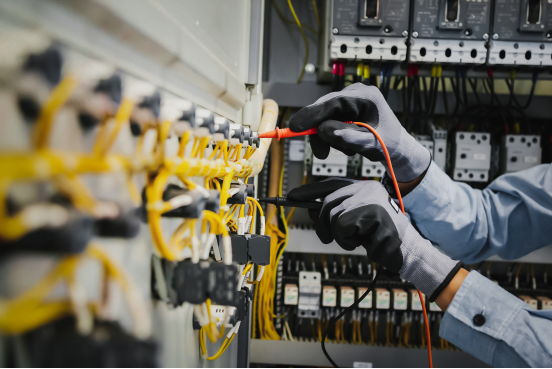
First and foremost is real-time monitoring and anomaly‑alerting capability. For distribution cabinets, it can interface with single‑point or matrix infrared temperature sensors to directly capture temperature changes at critical components such as contacts and motor windings. When an abnormal temperature rise is detected, it promptly issues an alert via the display screen and the cloud platform, thereby preventing faults like short circuits and equipment burnout caused by overheated contacts. For power systems, this effectively equips distribution cabinets with a “real-time body‑temperature monitor,” nipping safety incidents in the bud.
For cable temperature monitoring, LoRa’s wireless communication capabilities address the pain points of traditional wired solutions. Cable installation environments are often complex; conventional wired systems require disrupting existing circuits or frequent re‑wiring, whereas wireless temperature sensors can be flexibly deployed at various points along the cable, free from routing constraints. This enables precise temperature monitoring, timely detection of anomalies caused by overloads or aging, and proactive mitigation of risks such as fires triggered by cable overheating.
Given that distribution cabinets and cables are often deployed in challenging environments such as industrial workshops and outdoor base stations, wireless temperature sensors exhibit exceptional environmental robustness: they operate across a temperature range of −30°C to 65°C and tolerate relative humidity from 5% RH to 90% RH. Whether facing the stifling heat of high‑temperature workshops or the frigid conditions of winter outdoors, these sensors deliver stable performance, ensuring uninterrupted, accurate temperature readings and providing continuous protection for equipment safety.
In addition, its capability to store over ten years of historical data provides robust data support for the operation and maintenance of distribution cabinets and cables. By analyzing historical temperature trends, maintenance personnel can identify patterns in equipment temperature changes, anticipate potential failure risks, and implement predictive maintenance—for example, proactively replacing aged cables based on quarterly temperature fluctuations, thereby preventing unexpected outages, reducing maintenance costs, and enhancing the stability of equipment operation.
III. Beyond Distribution Cabinets and Cables: The Versatile Adaptability of Wireless Temperature Sensors Across Multiple Applications
The value of wireless temperature‑sensing sensors extends far beyond temperature monitoring in distribution cabinets and cables. With features such as multi‑sensor compatibility, broad environmental adaptability, and remote management, they can meet the temperature‑monitoring needs of multiple industries, serving as a versatile temperature‑management solution across diverse applications.
In the warehousing and logistics sector, it can interface with temperature and humidity sensors to monitor, in real time, the temperature and humidity conditions in cold-chain warehouses—such as those storing food or pharmaceuticals—or in hazardous‑chemical storage facilities. Data is simultaneously stored locally and uploaded to the cloud, meeting the cold-chain requirement for end-to-end traceability. At the same time, it integrates with refrigeration and humidification systems to maintain a stable warehouse environment, preventing product spoilage or mitigating risks associated with abnormal temperature and humidity levels for hazardous materials.
In environmental monitoring applications, it is compatible with sensors for PM2.5/PM10, TVOC, formaldehyde, CO₂, and more, enabling simultaneous indoor and outdoor temperature and air quality monitoring. It supports 4G‑based remote data transmission to a cloud platform, generating trend charts that facilitate analysis and management by environmental agencies or property managers—for example, when CO₂ levels exceed the threshold in an office building, it can automatically activate the ventilation system to ensure a healthy indoor environment.
In the smart agriculture sector, LoRa’s long-range wireless communication capabilities are well-suited to open‑air environments such as greenhouses and livestock farms. It enables sensor connectivity without complex wiring, allowing real-time monitoring of temperature and humidity and seamless integration with devices like roller shutters and ventilation fans. When greenhouse temperatures exceed set thresholds or humidity falls below desired levels, the system automatically adjusts conditions. Meanwhile, historical data can be used to analyze the relationship between crop growth and environmental factors, helping to optimize cultivation strategies.
In the healthcare sector, high-precision temperature and humidity monitoring combined with long‑term data storage capabilities can meet the temperature‑sensing requirements of hospital pharmacies, ICU environments, and medical equipment such as MRI scanners. The device supports MQTT protocol integration with hospital IoT platforms, enabling seamless incorporation into smart healthcare management systems and ensuring stable temperature conditions for both clinical environments and medical devices.
In public‑facility settings, it monitors the temperature of data center server rooms, subway equipment rooms, and outdoor communication base stations, activating cooling systems to prevent equipment from shutting down due to overheating. It also supports multi‑sensor display (up to 16 channels), streamlining the deployment of monitoring devices and reducing operational‑maintenance burdens for public facilities.
IV. Core Advantages of Wireless Temperature Sensors: Why They Are the Safe and Efficient Choice for Temperature Measurement
From distribution cabinets and cables to multi‑domain compatibility, wireless temperature sensors are poised to become the mainstream choice—driven by four key advantages that address the pain points of conventional temperature measurement while aligning with real‑world application needs.
High integration is the key to its cost advantage. It combines data acquisition, storage, display, transmission, and interlocking into a single unit, eliminating the need for separate display terminals, storage devices, or control modules. This significantly reduces the number of components required for system deployment, lowering hardware costs and installation complexity—enabling users to quickly implement temperature‑monitoring functionality without having to build a complex ancillary system, thereby improving the return on investment.
Its robust environmental adaptability ensures stable operation. With a wide temperature range of −30°C to 65°C and a humidity tolerance of 5% RH to 90% RH, it can reliably perform in complex settings such as industrial environments, outdoor applications, and cold-chain logistics. Unlike conventional temperature‑measurement devices that are highly susceptible to environmental factors, this solution maintains continuous operation under harsh conditions, guaranteeing the continuity and accuracy of temperature data while minimizing monitoring interruptions caused by equipment failures.
Flexible scalability meets the customized needs of diverse application scenarios. Supporting multiple interfaces such as LoRa, RS485, and I/O, it is compatible with various types of sensors—including temperature, temperature‑humidity, and air‑quality sensors. Users can flexibly add or remove sensors and adjust their types to suit the requirements of distribution cabinets, cables, or other environments, enabling adaptation to temperature‑monitoring systems of different scales without replacing core equipment, thereby reducing subsequent upgrade costs.
Ease of operation and management lowers the barrier to entry. The 10.1‑inch high‑precision capacitive touchscreen enables intuitive on‑site operation, allowing staff to view data without specialized training. Meanwhile, the cloud platform and mobile app facilitate remote monitoring, enabling headquarters or the operations center to track temperature readings at multiple locations in real time. Whether conducting on‑site maintenance or managing remotely, tasks can be carried out efficiently, further enhancing temperature‑monitoring effectiveness.
Infrared temperature measurement system
5.1 System Functions
Any object with a temperature above absolute zero (-273°C) emits infrared radiation. The emission spectra of objects at different temperatures do not intersect; as temperature rises, the total radiated energy increases while the peak wavelength decreases, with wavelength inversely proportional to temperature. By detecting the wavelengths of an object’s infrared radiation, its temperature can be accurately measured.
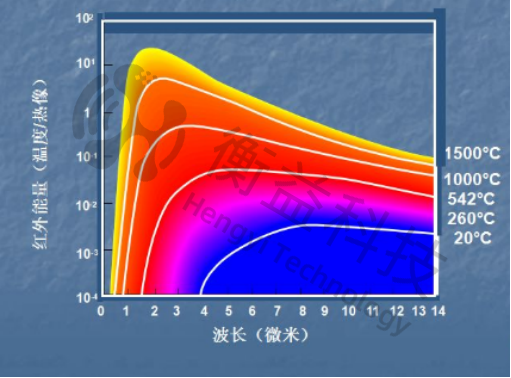
Infrared temperature measurement employs a point-by-point analysis approach: the thermal radiation from a localized area of the object is focused onto a single detector, and the radiated power is converted into temperature using the known emissivity of the object. Because the objects being measured, the measurement ranges, and the application scenarios vary, infrared thermometers differ in their external design and internal architecture; however, their basic structure is broadly similar, comprising an optical system, a photodetector, a signal amplifier and processor, as well as display and output components.
Our company has developed an infrared temperature measurement system by leveraging wireless transmission, an IoT platform, and infrared matrix temperature-sensing probes. The block diagram is shown below:
 5.2 Product Introduction
5.2.1 Front-end Sensors
5.2.1.1 Infrared Matrix Temperature Measurement (32×24)
- Product Features
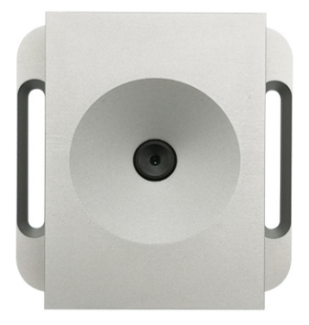
The infrared thermal‑array alarm employs multi‑point infrared sensors; by aligning the sensing element with the target object, it can measure the surface temperature of the object in real time. The sensor’s detection range spans from 0 cm to 200 cm.
- Product image
- Product Specifications
Project
|
Parameter
|
Note
|
Temperature measurement array
|
There are two specifications available: one is 32x32, and the other is 32x24.
|
|
Temperature measurement principle
|
Thermopile temperature measurement
|
|
Temperature measurement angle
|
The 32x32 model has a temperature measurement angle of 33°, while the 32x24 model has a temperature measurement angle of 55° x 35°.
|
|
Temperature measurement range
|
-50℃~300℃ (Other temperatures require calibration and adjustment)
|
|
Effective detection range
|
0 cm~200 cm
|
|
Operating temperature
|
-20℃~60℃
|
|
Detection speed
|
0.1 second
|
|
Internet of Things Protocol
|
Supports MQTT
|
|
External Data Interface
|
Choose one of the following: RJ45, RS485, or I/O output.
|
|
Temperature measurement error
|
Within the light spot, an 80 cm measurement error corresponds to a temperature deviation of 0.3°C.
|
|
Software Support
|
|
|
Power supply
|
8V~28V
|
|
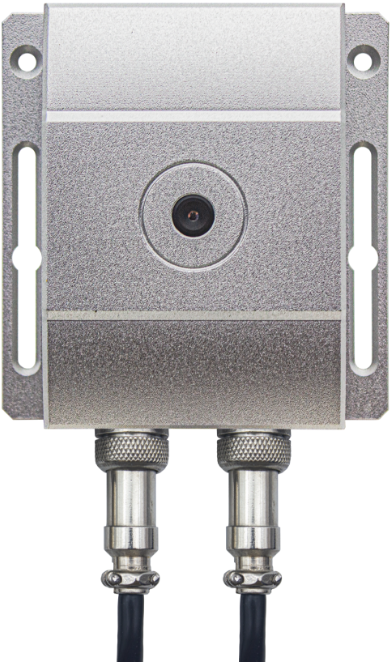
5.2.1.2 Infrared Matrix Temperature Measurement (80×62)
- Product Features
This product is a next-generation thermometer that integrates infrared array temperature measurement with network transmission. It features rapid infrared array-based temperature sensing, network connectivity, over‑range alarms, and infrared imaging. Equipped with a high‑sensitivity infrared detector and a high‑resolution visible‑light camera, the device can accurately detect temperature variations and perform precise temperature measurements of targets in the environment.
- Product image
- Product Specifications
Interface Name
|
Specifications
|
Explanation
|
Power supply
|
DC 9~24V
|
Wide-voltage power supply, facilitating centralized deployment and control.
The power supply interface provides a 3.81 mm plug-in terminal.
|
Indicator light
|
2 pieces
|
1 power indicator light
1 system status indicator light
|
Button
|
1 piece
|
Reset button
|
Temperature measurement range
|
-20℃~400℃
|
|
Temperature measurement accuracy
|
±0.25℃
|
|
Network port
|
1-port 100 Mbps network port
|
|
RS485
|
Route 1
|
Standard MODBUS
|
Digital output
|
Route 1
|
1-channel relay output
|
Infrared pixel
|
80x62
|
|
Temperature measurement range
|
-20℃~400℃
|
|
FOV(H/V/D)°
|
45/34/56
90/67/122
105/79/134
|
By default, it is 45°, with three specifications available. (H/V/D) stand for horizontal 45°, vertical 34°, and diagonal 56°, respectively.
|
4.2.2 Wireless Gateway
- Feature Introduction
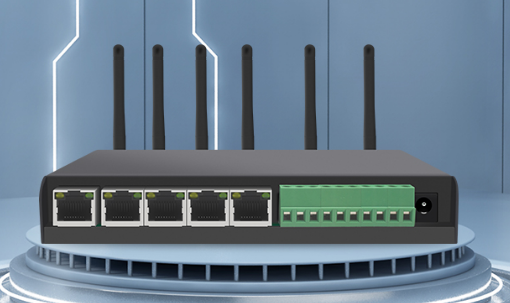
A LoRaWAN gateway is an IoT‑grade gateway router based on the low‑power, wide‑area LoRaWAN protocol. It provides IoT devices with low‑power, mobile, and secure local two‑way wireless communication, supporting multiple wireless connectivity options including LoRa, 2G/3G/4G/5G, and Wi‑Fi. The LoRaWAN gateway employs a star‑topology architecture: front‑end node devices connect directly—via a single hop—to one or multiple LoRaWAN gateways, enabling wireless communication between end devices and cloud servers, or alternatively, connecting to the cloud via standard IP. It is widely deployed in smart cities, smart communities, smart campuses, smart oilfields, smart tobacco industries, and more.
- Product image
- Product Specifications
Project
|
Parameter
|
Note
|
|
Product Features
|
LoRa functionality
|
Supports the standard LoRaWAN protocol.
|
|
LoRa wireless communication features eight uplink channels and one downlink channel.
|
|
||
Mobile wireless functionality
|
Supports Wi-Fi hotspot functionality.
|
|
|
LTE supports three mode options, covering China, Europe, and the United States; in China, it fully supports all network bands.
|
|
||
Supports Ethernet and 3G/4G/5G uplink/downlink data backhaul, with automatic handover.
|
|
||
System Functions
|
Supports overseas TTN servers
|
|
|
Supports switching between Chinese and English interfaces and setting the local time.
|
|
||
Supports remote administrator login for maintenance and troubleshooting.
|
|
||
Supports MQTT and web-based management.
|
|
||
Supports restoring factory settings via button press or web interface.
|
|
||
Wireless Performance
|
LORA wireless channel line
|
8 channels
|
|
Work mode
|
Full-duplex/Half-duplex
|
|
|
LoRa communication rate
|
292 bps ~ 5.4 Kbps
|
|
|
Maximum transmit power
|
27dbm
|
|
|
Maximum receiving sensitivity
|
-141 dBm (SF=12)
|
|
|
Operating frequency band
|
China 470MHZ
Australia 923MHZ
United States 915MHZ
Europe 868MHZ
|
The default is 470 MHz; customization is required for different frequency bands.
|
|
Data Upload
|
10/100M Ethernet and 3G/4G/5G
|
5G is not supported by default.
|
|
LTE standard
|
Domestic 4G supported frequency bands
|
LTE-TDD: B38/B39/B40/B41 LTE-FDD: B1/B3/B5/B7/B8 TD-SCDMA: B34/B39 UMTS: B1/8 EVDO: 800MHz CDMA1x: 800MHz GSM: 850/900/1800/1900
|
|
European 4G supported frequency bands
|
FDD LTE: B1/B3/B5/B8/B20
TDD LTE: B38/B40/B41
WCDMA:B1/B5/B8
GSM: B3/B8
|
|
|
U.S. 4G supported frequency bands
|
FDD LTE: B2/B4/B12
WCDMA LTE: B2/B4/B5
|
|
|
Wi-Fi
|
Supports 802.11a/b/g/n protocols, 2.4 GHz band
|
|
|
Ethernet
|
Supports 10M/100M adaptive network communication.
|
|
|
Product Specifications
|
Operating temperature
|
-30℃~65℃
|
|
Operating temperature
|
5%RH~90%RH
|
|
|
Certification
|
CE/FCC
|
|
|
Power supply
|
DC power supply, voltage range 6V to 12V.
|
|
|
5.2.3 Alarm Terminal
- Product Features
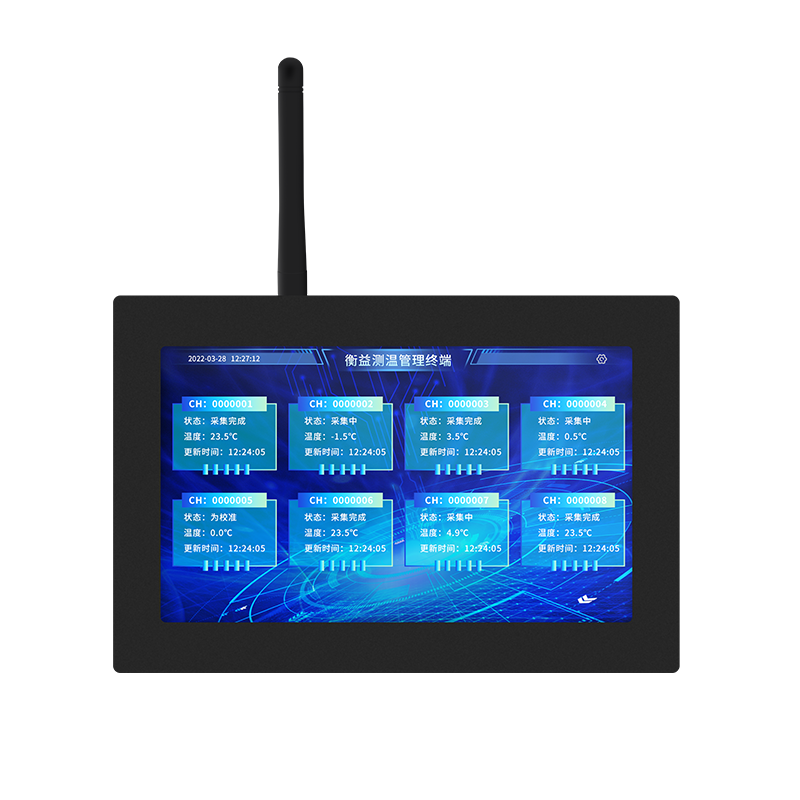
The alarm terminal provides unified management of multiple sensor channels. It can simultaneously display data from several sensors on the screen and store, transmit, and analyze the acquired sensor readings. Additionally, the terminal can interface with external control devices—such as sprinklers, fans, and humidifiers—via I/O and RS‑485 ports.
- Product image
- Product Specifications
Project
|
Parameter
|
Note
|
|
Display Function
|
Display types
|
TFT true color
|
|
Display resolution
|
1024X600
|
|
|
Types of touch controls
|
High-precision capacitive touchscreen
|
|
|
Sensor display count
|
Supports multiple display modes: you can show one window in full screen, or two; up to 16 windows can be displayed simultaneously.
|
|
|
Display size
|
10.1 inches
|
|
|
System Functions
|
Real-time data
|
It can display sensor data in real time on the screen in multiple formats.
|
|
Historical data
|
It can store historical data for more than one year and allows you to easily display this data on the touchscreen.
|
|
|
Control method
|
You can directly manipulate the screen with your hands to zoom in and out.
|
|
|
Supported sensor types
|
Supports sensor data for temperature and humidity, temperature, PM2.5/PM10, TVOC, formaldehyde, CO2, and more.
|
|
|
Data Upload
|
10/100M Ethernet and 3G/4G/5G
|
5G is not supported by default.
|
|
Communication protocol
|
Local support for LoRa and LoRaWAN connectivity with sensors,
Remote support for MQTT connectivity to the cloud platform.
|
|
|
Local Wireless
|
Supports LoRa wireless communication, with a frequency range of 31 MHz to 915 MHz.
|
Wireless communication is an optional accessory; the default frequency band is 470 MHz.
|
|
Product Specifications
|
Operating temperature
|
-30℃~65℃
|
|
Operating humidity
|
5%RH~90%RH
|
|
|
Certification
|
CE/FCC
|
|
|
Power supply
|
6V~12V
|
|
|
5.2.4 Infrared Thermal Array Temperature Measurement and Alarm Platform
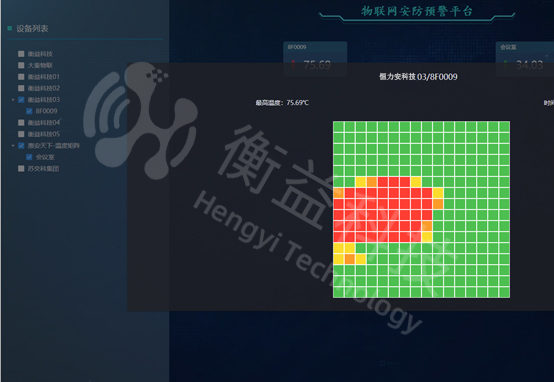
The infrared thermal‑pile alarm platform is a system that manages DTU transmission devices and infrared thermal‑pile sensors, receives temperature data from the thermal piles, and triggers alarms. It provides the following functions:
- It can manage the gateway.
- It can manage infrared thermopile sensors.
- It can dynamically display the temperature image of an infrared thermopile.
- It can set an alarm threshold for temperature, and when the temperature exceeds this threshold, it can trigger alerts via SMS and voice messages.
- Temperature data is saved, enabling analysis of historical records.
Save the operational logs of each device.
Conclusion
As equipment safety and operational efficiency become increasingly critical, wireless temperature‑sensing sensors—centered on monitoring distribution cabinets and cables—have expanded into a wide range of applications. With end-to-end functionality, robust security features, versatile adaptability to diverse scenarios, and key competitive advantages, they address longstanding pain points of conventional temperature measurement, such as complex wiring, data latency, and poor environmental resilience. These sensors are not only vigilant guardians of equipment integrity but also powerful enablers of operational efficiency. As IoT technologies continue to evolve, they will further unlock value across an expanding array of specialized use cases, driving the temperature‑monitoring sector toward greater intelligence, reliability, and efficiency.
Shenzhen Hengyi Technology’s wireless temperature‑monitoring system integrates data acquisition, storage, display, transmission, and automated control into a single solution. It is widely used across various industries: in industrial settings—such as electrical equipment manufacturers and production workshops—for monitoring equipment temperatures; in cold‑chain and hazardous‑chemical warehousing to ensure cargo safety; by property management and environmental protection agencies for environmental monitoring; in agricultural greenhouses and livestock farms to regulate growing conditions; in data centers, transportation hubs, and communication base stations for equipment maintenance; and in hospitals for managing pharmaceutical storage and ward environments. The system intelligently links with temperature‑control and ventilation devices, reducing costs while boosting efficiency and safeguarding safety. Powered by a 1.2 GHz high‑speed CPU and backed by over ten years of data retention, it features a 10.1‑inch high‑precision capacitive touchscreen for intuitive operation, and supports Ethernet, 4G, and 5G connectivity for cloud‑based data upload and mobile app access, enabling real‑time visualization and full traceability of measurement data.
MORE NEWS
Contact Us
Tel:+86-189-23711266 400-1273-421
E-mail:liulin@rf-md.com
Shenzhen office: 506-509, zone 1, block B, Huayuan science and Technology Innovation Park, No. 168, Baoyuan Road, Xixiang, Bao'an District, Shenzhen
Changsha Branch: 21d, building F4, Lugu enterprise Plaza, No. 27, Wenxuan Road, Yuelu District, Changsha

Follow us
-

E-mail:
yangyalan@rf-md.com
-

Tel:
+86-755-23284193
-
